
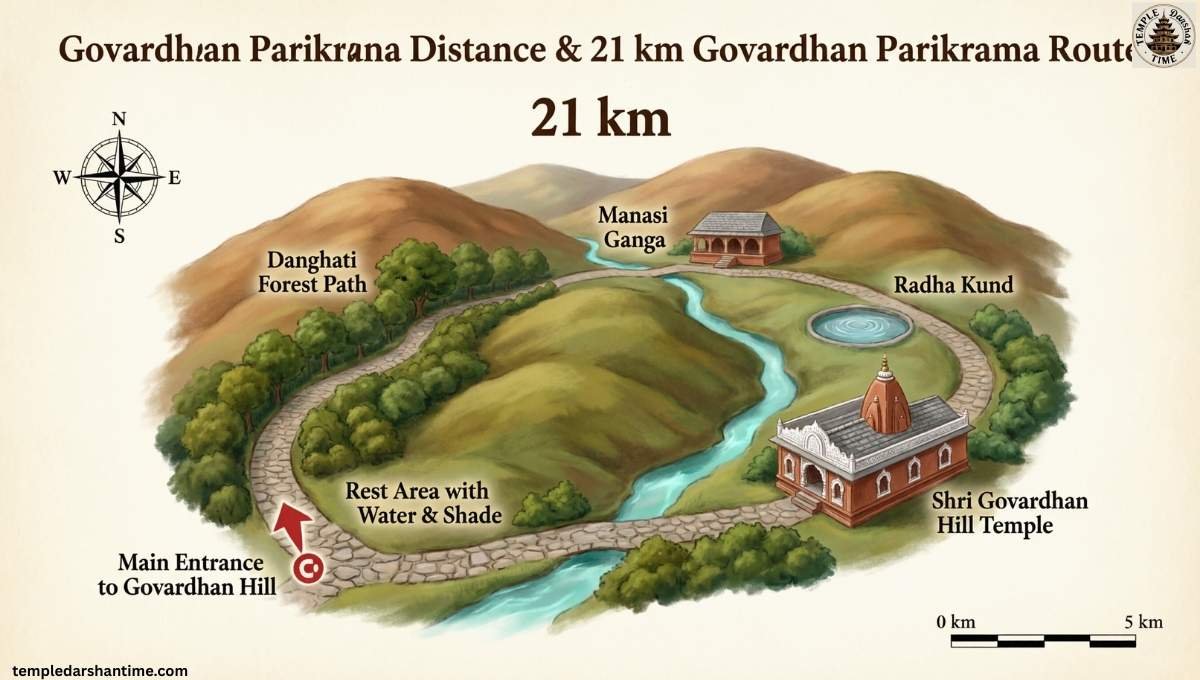
Ever wondered how long it really takes to complete the Govardhan Parikrama Distance? Planning a spiritual walk around Govardhan Parvat can be confusing, especially when you try to figure out the 21 km Govardhan Parikrama route, the Govardhan Parikrama starting point, or the Govardhan Parvat parikrama distance. You might also be unsure about the Govardhan Parikrama timing, making the whole journey feel a little overwhelming. It’s natural to want clear answers before setting out on this sacred path.
In this blog, we’ll break everything down for you in simple steps. From the exact Govardhan Parikrama Distance and route details to tips on timing, stops, and what to expect along the way, you’ll get a complete guide that makes planning your pilgrimage easy. By the end, you’ll know exactly how to prepare and enjoy this spiritual journey without any guesswork.
Why Govardhan Parikrama Is Spiritually So Powerful
Govardhan Parvat is not just a hill , it is considered the physical form of Lord Krishna himself. The scriptures describe Govardhan as Giridhari, meaning the one who lifts the mountain. Worshipping and walking around this sacred hill is equal to worshipping Krishna directly.
The 21 km govardhan parikrama route passes through dozens of ancient temples, kunds, and sacred spots. Each location has a deep story from Krishna’s Vrindavan leelas. Walking this route with devotion fills the heart with divine energy that is impossible to describe in words.
Spiritual Benefits of Govardhan Parikrama
Completing the govardhan parvat parikrama distance is believed to grant moksha, peace, and liberation from the cycle of birth and death. Saints and scriptures say that one parikrama equals visiting all the holy pilgrimage sites of India. The blessings received here are considered priceless and eternal.
Devotees who complete the parikrama with a pure heart are said to receive direct grace from Radha Rani and Lord Krishna. The spiritual vibrations around Govardhan Hill are uniquely powerful. Even science acknowledges that pilgrimage walking reduces stress and increases mental clarity significantly.
Many saints have made Govardhan Parikrama their daily spiritual practice for decades. Chanting the name of Krishna while walking multiplies the spiritual benefits many times over. This is why devotees from across the world visit Govardhan regardless of season or weather.
| Spiritual Benefit | Description |
| Sin Purification | Removes accumulated karma from multiple lifetimes |
| Moksha | Liberation from the cycle of rebirth |
| Health & Peace | Mental clarity and physical strength |
| Divine Darshan | Chance to receive blessings from Govardhan himself |
| Wish Fulfillment | Many devotees report prayers being answered |
Govardhan Parikrama Distance – Complete Guide with Timings and Variations
Understanding the govardhan parikrama distance is important before you begin your spiritual journey. The route has two main versions , the longer outer path and the shorter inner path. Both are equally sacred but serve different types of devotees.
The govardhan parvat parikrama distance can vary slightly depending on which route you take and how many temple stops you make. Pilgrims walking barefoot on the traditional path cover the full 21 km circuit. Those with health limitations can choose the shorter inner route for a fulfilling experience.
Total Govardhan Parikrama Distance
The total govardhan parikrama distance for the outer Badi Parikrama is 21 km. The inner Chhoti Parikrama covers approximately 11 to 12 km. Both routes start and end at the same point, making navigation easy for first-time visitors.
The 21 km govardhan parikrama route is the most traditional and spiritually complete path. It encircles the entire Govardhan Hill including all its major sacred spots. Walking the full distance is considered the most meritorious form of this pilgrimage.
| Route Type | Distance | Suitable For |
| Badi Parikrama (Outer) | 21 km | Healthy adults, devoted pilgrims |
| Chhoti Parikrama (Inner) | 11-12 km | Elderly, children, first-timers |
| Dandawat Parikrama | 21 km (prostrations) | Advanced devotees only |
How Much Time Does Govardhan Parikrama Take?
Govardhan parikrama timing depends entirely on your pace and the number of stops you make. An average healthy walker completes the 21 km govardhan parikrama walking time in 6 to 8 hours. Devotees who stop at every temple and kund may take 10 to 12 hours.
Those doing Dandawat Parikrama (prostration by prostration) can take several days to complete the circuit. This is the most intense and devotional form of the parikrama. It requires extreme physical fitness and deep spiritual commitment.
Key Factors Affecting Parikrama Time:
- Walking speed , average pace is 3 to 4 km per hour on this route
- Temple stops , each stop adds 15 to 45 minutes depending on crowds
- Season , summer heat slows pilgrims significantly
- Crowd size , festival days like Diwali and Annakut attract massive crowds
- Type of parikrama , barefoot walking is slower than sandal walking
- Health condition , elderly pilgrims naturally take more time and rest breaks
Govardhan Parikrama Route – Complete Guide to Sacred Places and Spiritual Stops
The govardhan parikrama route is lined with ancient temples, holy kunds, and sacred forests. Every corner of this path holds a divine story from Krishna’s life. Walking with awareness of each location transforms the journey into a deep spiritual experience.
Pilgrims are advised to carry a Govardhan parikrama map before starting. The route is well-marked but can be confusing at certain junctions. A local guide can also help you discover lesser-known sacred spots along the way.
Starting Point of Govardhan Parikrama
The govardhan parikrama starting point is Mansi Ganga Ghat near the main Govardhan town. Most pilgrims begin their journey here after taking a holy dip. This is also where the parikrama traditionally ends, completing the sacred circle.
Jatipura is another popular govardhan parikrama starting point for those coming from the Mathura side. Both starting points eventually connect to the same main circuit. Choose the starting point based on which direction you’re approaching from.
Badi Govardhan Parikrama Route (Outer, Longer Route)
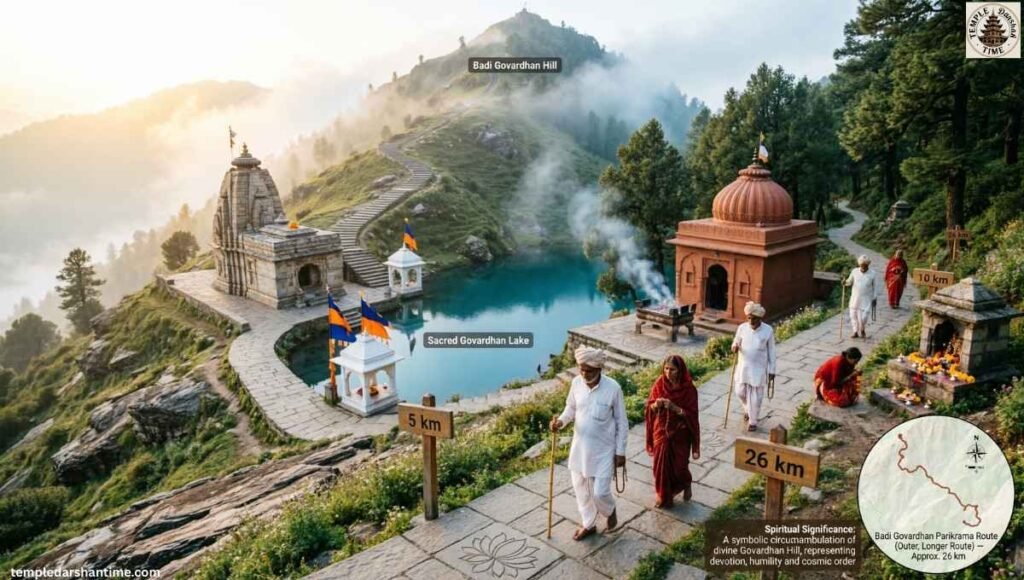
The Badi Parikrama covers the complete 21 km govardhan parikrama route around the outer edges of Govardhan Hill. This is the traditional route followed by saints and devotees for thousands of years. It includes all major temples and sacred water bodies.
Walking the Badi Parikrama takes you through villages, forests, and ancient ghats. The path transitions from busy town areas to peaceful rural landscapes. This variety makes the journey both spiritually enriching and physically engaging.
1. Daan Ghati Mandir
Daan Ghati Mandir is one of the most important stops on the govardhan parikrama route. This is the spot where Krishna playfully collected tolls from Gopis carrying their pots of butter and milk. The temple deity here is beautifully decorated and draws huge crowds daily.
The atmosphere at Daan Ghati is festive and devotional throughout the day. Aarti timings here are especially beautiful and spiritually uplifting. Do not miss the morning aarti if you begin your parikrama at sunrise.
2. Sankarshan Kund
Sankarshan Kund is a sacred pond named after Lord Balarama, also known as Sankarshan. A holy dip in this kund is believed to cleanse sins and bring physical healing. The kund is surrounded by ancient trees and has a very peaceful atmosphere.
Many devotees spend time in meditation by the kund before continuing their parikrama. The waters here are considered especially sacred during Balarama Jayanti. This spot is often missed by tourists but deeply revered by serious pilgrims.
3. Poonchhri Ka Lautha
Poonchhri Ka Lautha marks the tail end of Govardhan Parvat according to ancient belief. This is a small but deeply significant spot on the 21 km govardhan parikrama route. Pilgrims bow down here and offer prayers to the hill itself.
The location is quiet and less commercialized compared to other stops. This makes it a perfect place for silent prayer and reflection. Many sadhu saints make this their meditation spot during parikrama.
4. Shri Nath Ji Temple
Shri Nath Ji Temple is one of the most visited shrines on the entire govardhan parikrama route. The deity here is a form of Krishna as the lifter of Govardhan Hill. The temple has stunning architecture and intricate carvings depicting Krishna’s pastimes.
Darshan at Shri Nath Ji fills devotees with immense joy and spiritual energy. The prasad distributed here is considered especially blessed. Pilgrims often spend 30 to 45 minutes at this important temple stop.
5. Indraman Bhang
Indraman Bhang is the sacred spot where Lord Indra, the rain god, is said to have surrendered to Krishna. After Krishna lifted Govardhan Hill and defeated Indra’s storms, Indra came here to seek forgiveness. The spiritual significance of this location is deeply connected to the hill’s main legend.
This spot reminds every pilgrim of Krishna’s supreme power and protection. Standing here, you feel connected to that ancient moment of divine grace. It is a deeply moving stop for devotees who know the story well.
6. Jatipura Temple
Jatipura is a major village on the govardhan parikrama route and home to an important temple complex. This area is also a popular govardhan parikrama starting point for pilgrims approaching from Agra. The temple here houses a deity believed to be directly self-manifested.
Jatipura has several dharmakshalas and rest points for pilgrims. It is a good place to take a break, have prasad, and refresh yourself. Many parikrama guides and local helpers are also available here.
Chhoti Govardhan Parikrama Route (Inner, Sacred Route)
The Chhoti Parikrama covers approximately 11 to 12 km along the inner sacred path close to Govardhan Hill. This route is ideal for elderly devotees, children, and those with limited time. It still covers all the most essential spiritual stops of the parikrama.
The Chhoti Parikrama is also the route most commonly done during festival seasons when crowds are extremely heavy. The path is narrower and more intimate, passing very close to the hill itself. Many consider this inner route to be more intensely spiritual because of its proximity to Govardhan.
1. Lakshmi Narayan Mandir
Lakshmi Narayan Mandir on the inner route is a peaceful and beautiful temple. The deities of Lakshmi and Narayan are worshipped here with great devotion. Completing darshan here is considered auspicious before beginning the inner parikrama circuit.
The mandir has a clean and well-maintained premises. Morning prayers here set a beautiful spiritual tone for the rest of your walk. Pilgrims often receive a small tilak blessing from the pujari.
2. Uddhav Kund
Uddhav Kund is named after Uddhava, Krishna’s dearest friend and messenger. This sacred kund holds deep emotional significance in the Bhagavata Purana. It is said that Uddhava came here to convey Krishna’s message to the Gopis of Vrindavan.
The kund has a serene and contemplative atmosphere. Sitting by its banks and chanting is a deeply purifying practice. Many pilgrims take a ritual dip here before moving further on the route.
3. Radha Kund
Radha Kund is considered the most sacred water body in the entire Vaishnava world. The govardhan parikrama route passes directly by this divine pond. A single drop of its water is said to be more purifying than all the holy rivers of India combined.
Bathing in Radha Kund on certain auspicious days like Bahulastami is believed to grant spiritual liberation. The area is surrounded by temples and ashrams of great saints. Many devotees consider this the emotional and spiritual peak of their entire parikrama.
4. Shyam Kund
Shyam Kund sits directly beside Radha Kund and is equally sacred. This pond is associated with Lord Krishna himself and his divine pastimes. Bathing in both Radha Kund and Shyam Kund together is the most complete purification ritual of this pilgrimage.
The two kunds together represent the eternal union of Radha and Krishna. The sight of these twin kunds glowing in the morning light is breathtaking. This is a must-stop location on the Chhoti Govardhan Parikrama Route.
5. Kusum Sarovar
Kusum Sarovar is a magnificent stepped reservoir that is one of the most architecturally stunning spots on the govardhan parikrama route. Its ghats are built with beautiful red sandstone and have intricate carvings. This is where Radha Rani would come to collect flowers for Krishna’s worship.
The sarovar is surrounded by lush gardens and ancient trees. Early morning mist over the water creates a truly magical atmosphere. Photographers and pilgrims alike are deeply moved by the beauty of this sacred spot.
6. Kaan Wale Baba
Kaan Wale Baba is a fascinating and unique stop on the inner govardhan parikrama route. This is a small temple dedicated to a saint who is believed to fulfill the whispered prayers of devotees. Pilgrims whisper their deepest wishes into a small opening in the wall.
The faith around this spot is extraordinary and deeply touching. Hundreds of devotees line up here even in the early morning hours. Whether or not wishes come true, the act of surrendering your desires in prayer is deeply healing.
7. Mansi Ganga
Mansi Ganga is the most sacred kund in Govardhan and is considered a manifestation of the Ganga river itself. According to scripture, Krishna created this holy lake from his mind to fulfill the desire of Gopis who could not travel to the real Ganga. This is both the beginning and end point of the govardhan parikrama starting point circuit.
Taking a holy dip in Mansi Ganga before and after parikrama is the traditional practice. The entire area is lined with temples, flower sellers, and devotional music. Evenings at Mansi Ganga with the aarti and lamps floating on water are simply unforgettable.
Govardhan Parikrama Timings, Best Season, Rules & Practical Tips
Planning your visit properly is essential for a safe and meaningful parikrama. Govardhan parikrama timing and seasonal conditions make a big difference in your experience. A well-prepared pilgrim can complete the journey with comfort and deep spiritual focus.
Best Time and Timings for Govardhan Parikrama
The govardhan parikrama timing most recommended by locals is early morning, starting between 4:00 AM and 6:00 AM. Starting early helps you avoid the intense midday heat and heavy afternoon crowds. Most devoted pilgrims complete the full 21 km govardhan parikrama walking time before noon.
The best season for Govardhan Parikrama is October to March when the weather is cool and pleasant. Winter months are especially comfortable for the long walk. Monsoon season (July to September) makes the path slippery but is considered spiritually powerful.
| Season | Weather | Crowd Level | Best For |
| October – March | Cool & Pleasant | Moderate to High | All pilgrims |
| July – September | Humid & Rainy | Low to Moderate | Serious devotees |
| April – June | Hot & Dry | Low | Early risers only |
| Kartik Month | Cool | Very High | Maximum merit |
Important Rules to Follow During Govardhan Parikrama
- Always walk barefoot , wearing footwear on the parikrama path is considered disrespectful
- Walk in a clockwise direction , anti-clockwise walking is not permitted on this sacred route
- Maintain silence or chant , loud music or non-devotional conversations should be avoided
- Do not eat non-vegetarian food , the area of Govardhan is strictly vegetarian sacred territory
- Do not carry leather items , leather shoes, belts, or bags should not be brought on the parikrama
- Respect the hill , do not climb or touch Govardhan Parvat casually without reverence
- Keep the path clean , throwing garbage or plastic on the parikrama route is strictly prohibited
- Dress modestly , wear traditional Indian attire or simple, clean clothes out of respect
Practical Tips for a Smooth and Safe Govardhan Parikrama
Carry at least 2 to 3 liters of water before starting your parikrama. Dehydration is the most common health issue pilgrims face on this walk. Multiple water stalls are available along the route but carrying your own is safer.
Wear comfortable cotton socks even if going barefoot is preferred. The path can be rough, stony, and hot during certain seasons. A walking stick is also recommended for elderly pilgrims and those with knee issues.
Start your parikrama on an empty stomach or after a very light meal. Heavy food before a long walk causes discomfort and sluggishness. Take breaks at temple stops, eat light prasad, and keep moving steadily.
Carry small currency notes for temple donations and offerings. Most temples along the route do not accept digital payments or large notes. A small cloth bag for carrying prasad, flowers, and personal items is very useful.
Rituals and Traditions During Govardhan Parikrama
The Dandawat Parikrama is the most intense ritual tradition of this pilgrimage. In this form, the devotee lies flat on the ground, marks where their hands reach, stands up, and then lies down again from that mark. The full govardhan parikrama distance done this way can take 10 to 15 days.
Chanting “Radhe Radhe” or “Govardhan Maharaj Ki Jai” while walking is the most common devotional practice. The collective chanting of thousands of pilgrims creates an indescribable spiritual atmosphere. Many devotees also carry a small bag of Govardhan shila as a blessing.
Offering milk, water, and flowers to Govardhan Hill at designated points is a deeply traditional ritual. This act symbolizes nourishing the divine body of the hill. Priests at various points along the route guide pilgrims through these offerings with proper mantras.
The Annakut festival celebrated after Diwali draws millions of pilgrims to Govardhan. On this day, thousands of food items are offered to Govardhan in memory of Krishna’s original Annakut leela. The parikrama done on Annakut day is believed to carry infinite spiritual merit.
History of Govardhan Parikrama
The history of Govardhan Parikrama goes back more than 5,000 years to the time of Lord Krishna’s earthly pastimes. It is said that Krishna himself performed this parikrama and encouraged his devotees to worship Govardhan Hill instead of Indra. This act of devotion became the foundation of the entire parikrama tradition.
The great saint Vallabhacharya formalized the parikrama route and its associated rituals in the 15th and 16th centuries. His tradition established many of the major temples that still stand along the govardhan parikrama route today. The Pushti Marg sampradaya he founded considers Govardhan the supreme pilgrimage site.
Chaitanya Mahaprabhu, the Bengali saint who promoted Krishna bhakti across India, also visited Govardhan and performed the parikrama. His visit in the 16th century brought enormous attention and devotees from Bengal and beyond. The tradition of parikrama then spread rapidly across all Vaishnava communities of India.
Over centuries, the govardhan parikrama distance and route were gradually formalized. Ancient texts like the Brahma Vaivarta Purana and Skanda Purana mention Govardhan as supremely sacred. The tradition has continued unbroken for millennia and grows stronger with each passing generation.
Govardhan Parikrama Map
A proper Govardhan parikrama map is one of the most useful tools you can carry on this journey. The map helps you navigate between the many temples, kunds, and sacred stops along the full circuit. You can find printed maps at most hotels, dharmshalas, and tourist information centers in Govardhan town.
Digital maps on Google Maps now also show the govardhan parikrama route with reasonable accuracy. Searching “Govardhan Parikrama Route” on Google Maps gives you the general outline of the path. However, smaller sacred stops may not always be marked on digital maps.
Local parikrama guides are available for hire near Mansi Ganga and Jatipura. A good guide not only shows you the way but explains the significance of each sacred spot. Hiring a guide is especially recommended for first-time pilgrims doing the 21 km govardhan parikrama route.
Govardhan Parikrama 21 km
The Govardhan Parikrama 21 km route is the complete, traditional, and most meritorious form of this pilgrimage. It covers the full outer circumference of Govardhan Hill including every major sacred site. Completing all 21 km is the spiritual goal of every serious devotee who visits this holy place.
The 21 km govardhan parikrama route takes you through ancient villages, sacred forests, divine kunds, and historic temples. The landscape changes beautifully as you move from one section to another. This variety keeps the long walk engaging and prevents physical monotony during the journey.
Many pilgrims do the Govardhan Parikrama 21 km multiple times over the course of several days. Each parikrama is believed to carry equal merit regardless of how many times it is done. Regularity and consistency in doing the parikrama is considered extremely auspicious.
Govardhan Parikrama Distance by Walk
Govardhan Parikrama distance by walk is the most traditional and spiritually rewarding way to complete this pilgrimage. Walking barefoot on the parikrama path connects your body directly to the sacred earth of Govardhan. Every step taken with devotion is considered a spiritual offering to Lord Krishna.
The walking path is mostly flat with some uneven sections near the hill. The total govardhan parikrama distance by walk on the outer route is 21 km. A fit adult can complete this walking distance in 6 to 8 hours at a steady devotional pace.
For those unable to walk the complete distance, there are rest benches and shade points distributed along the route. You can also take short breaks at temple premises and kund ghats. The parikrama does not require completing it in one non-stop stretch , breaks are perfectly acceptable.
Govardhan Parikrama Timing
Govardhan parikrama timing is flexible and devotees can begin at any hour of the day. However, early morning between 4 AM to 6 AM is universally considered the best time to start. The predawn atmosphere on the parikrama path is filled with divine peace, cool air, and devotional chanting.
Evening parikramas starting around 4 PM to 5 PM are also popular, especially in summer months. The heat subsides by evening and the golden sunset light over Govardhan Hill is extraordinarily beautiful. Evening walkers typically complete the circuit by 10 PM to 11 PM.
Completing govardhan parikrama timing during Brahma Muhurta (the auspicious period between 4 AM and 6 AM) is considered most meritorious by scriptures. The mind is most calm, focused, and receptive to divine energy during this pre-sunrise window. Many devoted pilgrims wake up at 3 AM to ensure they begin at this sacred time.
Govardhan Parikrama 21 km Walking Time
The Govardhan Parikrama 21 km walking time for an average healthy adult is 6 to 8 hours. This estimate assumes a steady walking pace with brief stops at major temples and kunds. Devotees who take longer breaks at each sacred site typically complete the route in 9 to 12 hours.
During festival seasons like Diwali, Janmashtami, or Kartik Purnima, the 21 km govardhan parikrama walking time can stretch significantly. Massive crowds slow down movement considerably on these auspicious occasions. Pilgrims visiting during festivals should plan for the walk to take a full day.
For Dandawat Parikrama practitioners, the same 21 km route takes between 10 to 15 days depending on the devotee’s pace and physical condition. This is not recommended for those without proper preparation and guidance. A support person accompanying the devotee is strongly advised for Dandawat Parikrama.
Govardhan Parikrama Route
The Govardhan Parikrama route begins and ends at Mansi Ganga in the heart of Govardhan town. From Mansi Ganga, the clockwise path takes pilgrims through Daan Ghati, Jatipura, Punchari Ka Lautha, Sankarshan Kund, and back. The inner route additionally covers Radha Kund, Shyam Kund, and Kusum Sarovar.
The govardhan parikrama route is lined with hundreds of small temples, food stalls, and sacred trees. Ancient peepal and kadamba trees provide shade along certain sections of the path. The route passes through both busy town sections and quiet rural areas, giving a beautiful contrast.
Road construction and urbanization have slightly altered some sections of the original govardhan parikrama route in recent decades. Local authorities and religious organizations are working to preserve and restore the traditional path. Pilgrims are advised to follow marked signs and avoid newly built shortcuts.
Govardhan Parikrama Distance from Vrindavan
The Govardhan Parikrama distance from Vrindavan is approximately 26 to 28 km by road. The journey by bus or taxi from Vrindavan to Govardhan takes about 45 minutes to 1 hour depending on traffic. Many pilgrims combine a visit to Vrindavan with their Govardhan Parikrama on the same trip.
The Mathura to Govardhan distance is approximately 26 km and is very well-connected by road. Buses from Mathura to Govardhan are frequent and affordable. Auto-rickshaws and shared taxis are also readily available for this route.
Pilgrims coming from Delhi can reach Govardhan via Mathura, which is on the Agra highway. Delhi to Govardhan distance is approximately 160 km and takes about 3 hours by car. Trains to Mathura from Delhi are also frequent, after which a local taxi or bus can take you to Govardhan.
Govardhan Parikrama by Rickshaw Price
Govardhan Parikrama by rickshaw is a popular option for elderly devotees, families with young children, and those with physical limitations. Cycle rickshaws and e-rickshaws are available at Mansi Ganga and other major starting points. This allows everyone to participate in the parikrama regardless of their walking ability.
The Govardhan Parikrama by rickshaw price varies depending on the type of vehicle and the season. A cycle rickshaw for the full 21 km govardhan parikrama route costs approximately ₹300 to ₹500 per person. E-rickshaws charge slightly more, ranging from ₹400 to ₹700 depending on negotiation.
During peak festival seasons, rickshaw prices can increase significantly due to high demand. It is advisable to negotiate and fix the price before starting your parikrama ride. Sharing a rickshaw with fellow pilgrims is a common practice that reduces cost considerably.
| Transport Type | Approximate Price | Journey Time |
| Cycle Rickshaw | ₹300 – ₹500 | 3 to 4 hours |
| E-Rickshaw | ₹400 – ₹700 | 2 to 3 hours |
| Walking (Barefoot) | Free | 6 to 8 hours |
| Dandawat | Free | 10 to 15 days |
Rickshaw pullers along the govardhan parikrama route are very familiar with all the temple stops. Most will wait for you at each stop as you take darshan and then continue forward. This makes the rickshaw parikrama a comfortable and spiritually complete experience even without walking.
Completing Govardhan Parikrama , whether by foot, rickshaw, or Dandawat , is a deeply transformational spiritual experience. The govardhan parikrama distance of 21 km may seem long, but devotion makes every step light and joyful. May your parikrama fill your heart with the eternal blessings of Shri Govardhan Maharaj.
Also Read About: Vaikunta Dwara Darshan Tirumala 2026: Ticket Booking, Dates & Entry Guide
Frequently Asked Questions
How long is the Govardhan Parikrama?
The Govardhan Parikrama Distance is about 21 km, usually taking 5 to 6 hours walking.
What is Govardhan Parikrama?
Govardhan Parikrama Distance is a sacred pilgrimage walking around Govardhan Parvat, honoring Lord Krishna spiritually.
Is Govardhan Parikrama difficult?
Walking the full Govardhan Parikrama Distance can be tiring but is manageable with proper preparation and timing.
What is the cost of Govardhan Parikrama?
The Govardhan Parikrama Distance requires no entry fee; expenses depend on food, stay, and travel arrangements.
Can I do Govardhan Parikrama by car?
The full Govardhan Parikrama Distance is meant for walking; vehicles are not allowed on the sacred path.
Which parikrama is best?
Completing the entire Govardhan Parikrama Distance on foot offers the most spiritual and fulfilling experience possible.
Conclusion
Completing the Govardhan Parikrama Distance is a deeply spiritual experience. The 21 km Govardhan Parikrama route takes you around sacred spots and holy kunds. Knowing the Govardhan Parikrama starting point makes planning much easier. The Govardhan Parvat parikrama distance is challenging for beginners, but walking patiently brings peace. Following the correct Govardhan Parikrama timing ensures comfort and avoids crowds. Every step along the Govardhan Parikrama Distance is full of devotion and blessings. Pilgrims often feel a strong connection with Lord Krishna while completing this sacred journey.
The full Govardhan Parikrama Distance offers spiritual growth and inner calm. By understanding the 21 km Govardhan Parikrama route, Govardhan Parikrama starting point, and Govardhan Parikrama timing, you can enjoy the journey fully. The Govardhan Parvat parikrama distance is not just a walk; it is a sacred path. Completing the Govardhan Parikrama Distance leaves every devotee with joy, faith, and a peaceful heart.

Michael Anderson is a spiritual content writer with 8+ years of experience documenting temple darshan timings across India. He has completed 100+ projects with 95% client satisfaction, helping thousands of devotees plan meaningful spiritual journeys.