
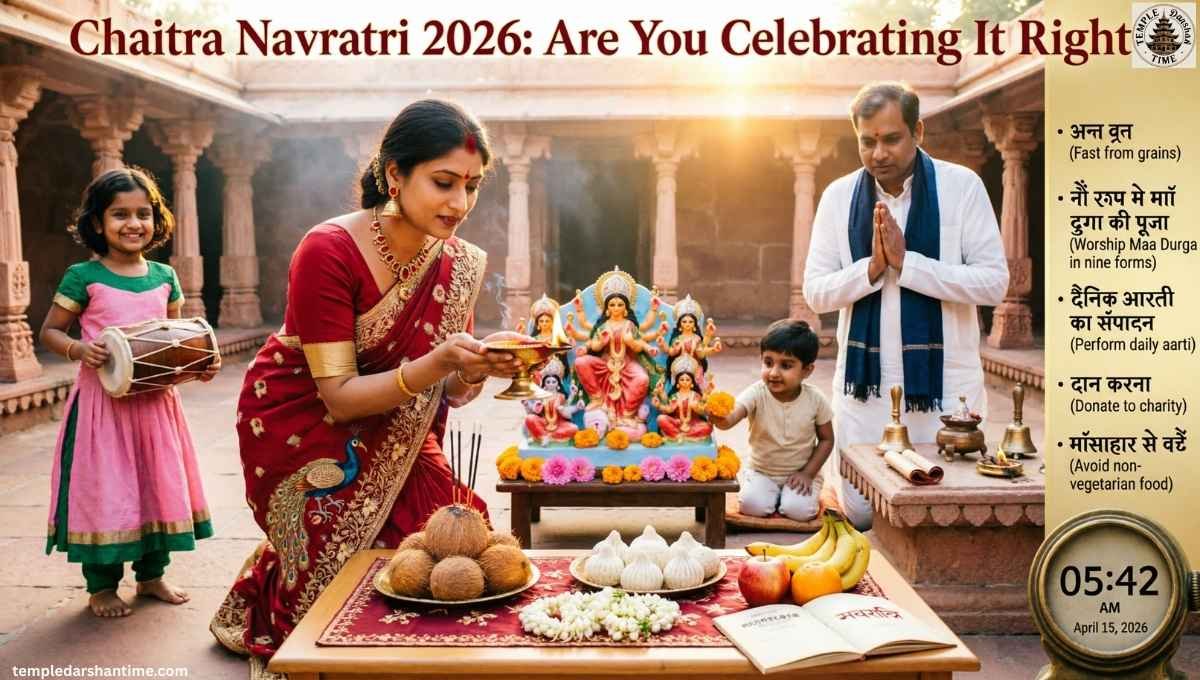
Chaitra Navratri 2026 begins on 19 March 2026 and ends on 27 March 2026. These nine sacred days celebrate the nine powerful forms of Goddess Durga. This festival marks the Hindu New Year and welcomes the spring season with devotion and renewed energy. Each day carries a specific goddess, colour, and ritual that holds deep spiritual meaning. From Ghatasthapana Muhurat on Day 1 to Ram Navami on Day 9, every moment is spiritually significant.
Many devoted Hindus also practice angapradakshinam during this period. Angapradakshinam benefits include deep spiritual purification, removal of sins, and stronger divine connection. Chaitra Navratri 2026 is the most auspicious time for new beginnings, fasting, and Maa Durga worship.
Chaitra Navratri 2026 Start and End Date
One of the most searched questions every year among devotees is , when does Chaitra Navratri start 2026? According to the Hindu Panchang, Chaitra Navratri 2026 dates are confirmed as Thursday, 19 March 2026 to Friday, 27 March 2026. These nine sacred days fall in the Shukla Paksha Chaitra month, meaning the bright fortnight of the lunar month of Chaitra, which is regarded as one of the most spiritually powerful periods in the Hindu calendar year.
Why Is Chaitra Navratri Also Called Vasanta Navratri and Rama Navratri?
Chaitra Navratri carries two widely used alternative names, each rooted in deep significance:
- Vasanta Navratri 2026 , The word “Vasanta” means spring in Sanskrit. Since this nine-day festival 2026 falls during the spring season, it is called Vasanta Navratri, symbolising renewal, fresh beginnings, and blooming positive energy across nature and human life.
- Rama Navratri 2026 , The festival concludes on Ram Navami 2026, the birth anniversary of Lord Shri Rama, the seventh avatar of Lord Vishnu and the beloved hero of the ancient Sanskrit epic Ramayana. This connection gives Chaitra Navratri its second name , Rama Navratri 2026.
Chaitra Navratri 2026 April , Does the Festival Fall in April?
Many devotees search specifically for Chaitra Navratri 2026 April, wondering whether any observance days extend into April. Based on the Chaitra Navratri 2026 Panchang, all nine days fall entirely in March this year, from 19 March to 27 March 2026. No part of the festival continues into April in 2026.
What About Chaitra Navratri 2027 and Navratri 2026 October?
- Chaitra Navratri 2027 is expected to begin in late March or early April 2027, subject to the Hindu lunar calendar calculations for that year.
- Navratri 2026 date October refers to Sharad Navratri, the autumn edition of the festival, which is a completely separate celebration from Chaitra Navratri and observed in the month of Ashwin.
Ghatasthapana Muhurat for Chaitra Navratri 2026
Ghatasthapana, also known as Kalash Sthapana 2026, is the foundational ritual that officially marks the beginning of Chaitra Navratri. Without this ritual being performed correctly, the nine days of worship are considered spiritually incomplete. The term comes from Sanskrit , “Ghata” means sacred pot and “Sthapana” means to establish , together representing the formal invitation of Goddess Durga’s divine energy into the home.
Ghatasthapana Muhurat 2026 Timing Table
The following table outlines the key dates and timings for Ghatasthapana Muhurat 2026, as per the Chaitra Navratri 2026 Panchang:
| Ritual Detail | Date | Auspicious Timing |
| Ghatasthapana Date | 19 March 2026 (Thursday) | Morning after sunrise |
| Pratipada Tithi Begins | 18 March 2026 (Wednesday) | Evening |
| Pratipada Tithi Ends | 19 March 2026 (Thursday) | Night |
| Best Window for Ritual | 19 March 2026 | Sunrise to mid-morning |
According to Hindu tradition, Ghatasthapana must always be performed during the Pratipada Tithi after sunrise. Performing this ritual at the correct auspicious time is believed to bring prosperity, divine protection, peace, and the full blessings of Shakti , the divine feminine energy , into the household for the entire year ahead.
What Happens During Kalash Sthapana 2026?
The Kalash Sthapana ritual involves several carefully observed steps:
- An earthen pot is filled with holy water, representing the presence of all sacred rivers
- Mango leaves are placed around the rim of the pot, symbolising fertility and auspiciousness
- A coconut is placed on top, representing the divine consciousness of the Goddess
- Sacred soil is spread on a platform, and barley seeds are sown around the Kalash
- An Akhand Jyoti , an uninterrupted lamp or flame , is lit alongside the Kalash and kept burning continuously for all nine days
The sprouting of barley seeds over the nine days is watched closely by families, as lush green growth is considered a positive sign of abundance and divine blessings for the year ahead.
Religious Importance of Chaitra Navratri
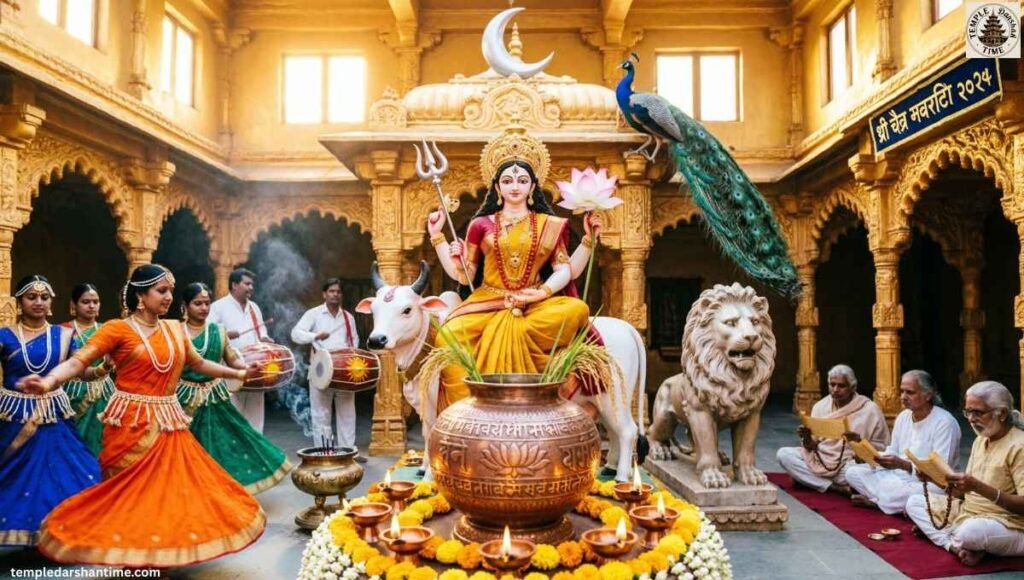
Chaitra Navratri significance in Hinduism is profound and multilayered. It is not simply a festival of worship , it is a complete spiritual experience that addresses the mind, body, and soul simultaneously. At its heart, the festival celebrates divine feminine energy, known as Shakti, and honours the Navdurga 2026 , the nine magnificent forms of Goddess Durga , each representing a unique cosmic power.
Three Core Spiritual Themes of Chaitra Navratri
Hindu scriptures and spiritual teachers identify three central themes that define why this festival holds such sacred importance:
- Victory of Good Over Evil , Each form of Goddess Durga is associated with the destruction of a specific form of evil, negativity, or demonic force. Chaitra Navratri reminds devotees that righteousness, faith, and devotion always triumph.
- Hindu New Year 2026 , Chaitra Navratri begins on the same Pratipada Tithi that marks the start of the Hindu New Year, making it a powerful time for new intentions, fresh starts, and positive life decisions aligned with new beginnings Chaitra Navratri brings.
- Awakening of Shakti , The festival is considered the period when divine feminine energy is most accessible to sincere devotees. Worship during these nine days is believed to carry far greater spiritual power than at any other time of the year.
Spiritual Benefits of Observing Chaitra Navratri
Devotees who observe Maa Durga worship with sincerity during this period are believed to receive the following spiritual benefits:
- Removal of deep-seated negativity and mental obstacles
- Strengthening of willpower through Navratri fasting
- Clarity of purpose and direction in life
- Protection from harmful energies and negative influences
- Acceleration of spiritual growth and inner awakening
Nine Days of Chaitra Navratri 2026: Goddess, Tithi, and Colour
Each of the nine days of Chaitra Navratri is dedicated to one specific form among the nine forms of Goddess Durga, from Maa Shailputri to Maa Siddhidatri. The table below provides a complete at-a-glance reference for all nine days, followed by detailed descriptions of each day’s goddess, colour, and spiritual significance.
Complete Nine-Day Reference Table
| Day | Date | Tithi | Goddess | Navratri Colour 2026 |
| Day 1 | 19 March | Pratipada | Maa Shailputri | Yellow |
| Day 2 | 20 March | Dwitiya | Maa Brahmacharini | Green |
| Day 3 | 21 March | Tritiya | Maa Chandraghanta | Grey |
| Day 4 | 22 March | Chaturthi | Maa Kushmanda | Orange |
| Day 5 | 23 March | Panchami | Maa Skandamata | White |
| Day 6 | 24 March | Shashthi | Maa Katyayani | Red |
| Day 7 | 25 March | Saptami | Maa Kalaratri | Royal Blue |
| Day 8 | 26 March | Ashtami | Maa Mahagauri | Pink |
| Day 9 | 27 March | Navami | Maa Siddhidatri | Purple |
This table serves as a quick daily reference for devotees observing all nine days of Chaitra Navratri 2026. Each colour carries a specific spiritual vibration that aligns with the energy of the Goddess worshipped that day.
Day 1 – 19 March (Pratipada)
Maa Shailputri , The Daughter of the Mountains
The first day of Chaitra Navratri 2026 begins with the worship of Maa Shailputri, whose name is derived from “Shail” meaning mountain and “Putri” meaning daughter. She is the daughter of Himavan, the king of the Himalayas, and represents unwavering strength and purity of character.
- Navratri Colour: Yellow , symbolising happiness, optimism, and the warmth of new beginnings
- Depicted as: Riding a bull, holding a trident and lotus flower
- Spiritual Benefit: Ideal day to begin Navratri vrat and set positive intentions for the nine days ahead
- Best Practice: Begin fasting, light the Akhand Jyoti, and offer yellow flowers to the Goddess
Day 2 – 20 March (Dwitiya)
Maa Brahmacharini , The Goddess of Devotion and Penance
On the second day, devotees honour Maa Brahmacharini, the goddess who embodies deep devotion, self-discipline, and spiritual penance. She is depicted walking barefoot, carrying a rosary in one hand and a water pot in the other, representing a life of purposeful spiritual focus.
- Navratri Colour: Green , reflecting growth, harmony, inner wisdom, and renewal
- Spiritual Benefit: Encourages devotees to deepen their commitment to prayer and spiritual practice
- Best Practice: Recite her mantra 108 times and offer sugar or panchamrit as a sacred offering
Day 3 – 21 March (Tritiya)
Maa Chandraghanta , The Goddess of Courage
Maa Chandraghanta is worshipped on the third day of Chaitra Navratri. She bears a half-moon shaped like a bell on her forehead, which is the source of her name. She is a fierce and protective form of the Goddess, riding a tiger and ready to destroy all forms of negativity.
- Navratri Colour: Grey , representing balance, stability, and calm inner strength
- Spiritual Benefit: Protects devotees from fear, anxiety, and negative forces in their lives
- Best Practice: Offer milk-based sweets and recite Chandraghanta stotram for courage and protection
Day 4 – 22 March (Chaturthi)
Maa Kushmanda , The Creator of the Universe
The fourth day celebrates Maa Kushmanda, who is revered in Hindu scriptures as the original creator of the universe. Her name means “the one who created the cosmos with a single smile.” She is depicted with eight arms, each carrying a weapon or sacred object, and she rides a lion.
- Navratri Colour: Orange , reflecting energy, enthusiasm, confidence, and vital life force
- Spiritual Benefit: Brings health, success, and creative energy to sincere devotees
- Best Practice: Offer malpua or coconut as prasad and pray for strength and good health
Day 5 – 23 March (Panchami)
Maa Skandamata , The Mother Goddess
The fifth day is dedicated to Maa Skandamata, the divine mother of Lord Kartikeya , also known as Skanda , who is the commander of the celestial army of the gods. She represents the unconditional love, nurturing power, and wisdom of motherhood.
- Navratri Colour: White , signifying peace, purity, spiritual clarity, and calm devotion
- Spiritual Benefit: Blesses devotees with wisdom, harmonious relationships, and emotional balance
- Best Practice: Offer bananas and white flowers while praying for family harmony and peace
Day 6 – 24 March (Shashthi)
Maa Katyayani , The Fierce Warrior Goddess
Maa Katyayani is one of the most powerful and fierce forms of Goddess Durga. According to Hindu mythology, she was born from the combined divine anger of Brahma, Vishnu, and Shiva to defeat the demon Mahishasura. She rides a lion and wields weapons in her multiple arms.
- Navratri Colour: Red , representing power, fierce courage, and divine protection
- Spiritual Benefit: Worshipped especially by young women seeking blessings for love, marriage, and victory over obstacles
- Best Practice: Offer honey and red flowers while chanting Katyayani mantra for strength
Day 7 – 25 March (Saptami)
Maa Kalaratri , The Destroyer of Darkness
Maa Kalaratri is the most intense and formidable among all the nine forms of Goddess Durga. Her dark complexion, flowing hair, and fierce expression represent her absolute power over death, time, and darkness. Despite her fearsome appearance, she is known to bestow fearlessness and liberation upon her devotees.
- Navratri Colour: Royal Blue , symbolising cosmic depth, divine power, and infinite energy
- Spiritual Benefit: Removes deep-rooted fears, destroys evil forces, and grants inner strength and spiritual liberation
- Best Practice: Offer jaggery as prasad and chant Kalaratri mantra for protection from negativity
Day 8 – 26 March (Ashtami)
Maa Mahagauri , The Goddess of Purity and Compassion
Chaitra Navratri 2026 Ashtami date falls on 26 March 2026, and this is one of the most spiritually significant days of the entire festival. Maa Mahagauri represents absolute purity, forgiveness, and compassion. Her name means “the extremely fair one,” and she is depicted in white garments riding a white bull.
- Navratri Colour: Pink , spreading love, kindness, warmth, and inner peace
- Spiritual Benefit: Purifies the heart, removes past karmic burdens, and blesses devotees with grace
- Key Ritual: Kanya Puja , the sacred ritual of worshipping young girls as living forms of the Goddess , is traditionally performed on Ashtami. Families invite young girls, wash their feet, offer food, and present gifts as an act of devotion to the divine feminine
- Best Practice: Perform Kanya Puja with full sincerity and offer coconut or halwa-puri as prasad
Day 9 – 27 March (Navami)
Maa Siddhidatri , The Bestower of Spiritual Powers
The ninth and final day of Chaitra Navratri 2026 is dedicated to Maa Siddhidatri, the most transcendent form of the Goddess. Her name means “the bestower of siddhis,” referring to supernatural spiritual powers and divine accomplishments. She is worshipped by gods, sages, and humans alike for the gift of wisdom and spiritual fulfillment.
- Navratri Colour: Purple , representing spirituality, transcendence, and the fulfillment of divine purpose
- Spiritual Benefit: Grants spiritual wisdom, removes worldly attachments, and opens the path to moksha or liberation
- Special Occasion: This day is also celebrated as Chaitra Navratri 2026 Ram Navami, marking the joyful birth anniversary of Lord Shri Rama
- Best Practice: Complete all nine days of worship, perform havan or fire ritual, and distribute prasad among family and neighbours
Why Wearing Navratri Colours Is Important

The tradition of wearing specific Navratri colours 2026 on each day of Chaitra Navratri is one of the most widely followed and spiritually meaningful practices associated with the festival. This is not simply a modern cultural trend , it is rooted in ancient Hindu understanding of colour psychology, energy vibrations, and divine symbolism.
The Spiritual Science Behind Daily Colour Significance
In Hindu philosophy, each colour carries a specific vibrational frequency that aligns with the energy of the Goddess honoured on that particular day. Wearing the assigned colour is believed to:
- Strengthen the devotee’s spiritual connection with the respective form of Maa Durga
- Attract the specific divine energy associated with that Goddess into one’s aura
- Deepen the overall devotional experience of Navratri worship
- Create a visible sense of community and shared devotion among Hindus worldwide
Chaitra Navratri 2026 Color Guide
Here is the complete Chaitra Navratri 2026 color guide with the spiritual meaning behind each colour:
- Yellow , Happiness, optimism, and the warmth of new beginnings
- Green , Growth, inner harmony, and spiritual wisdom
- Grey , Balance, calm strength, and mental stability
- Orange , Vitality, enthusiasm, and confident energy
- White , Peace, purity, and spiritual clarity
- Red , Power, fierce courage, and divine protection
- Royal Blue , Cosmic depth, divine wisdom, and infinite energy
- Pink , Love, compassion, kindness, and inner warmth
- Purple , Spirituality, transcendence, and fulfillment
Importance of Navratri Colours in Chaitra Navratri 2026
The Importance of Navratri Colours in Chaitra Navratri 2026 has grown significantly in recent years, with younger generations embracing the tradition both as a spiritual practice and a cultural expression. Social media has amplified awareness of daily colour significance, turning it into one of the most engaging aspects of modern Navratri observance. Ancient wisdom and contemporary life are beautifully bridged through this simple yet powerful daily practice.
Chaitra Navratri 2026 Rituals and Traditions
Chaitra Navratri is observed through a rich set of rituals and traditions that have been passed down through generations. Each ritual carries a specific spiritual purpose, and together they create a complete framework for nine days of devotion, self-discipline, and divine connection.
Ghatasthapana and Akhand Jyoti
As described earlier, the festival opens with Kalash Sthapana 2026 and the lighting of the Akhand Jyoti. The uninterrupted flame represents:
- The eternal and ever-present light of Goddess Durga
- The commitment of the household to nine days of unbroken devotion
- The burning away of ignorance, fear, and negativity through divine fire
Families take great care to ensure the Akhand Jyoti never goes out during the nine days, as an extinguished flame is considered inauspicious.
Fasting and Vrat
Navratri fasting is one of the most widely observed practices during Chaitra Navratri. Understanding the Navratri fasting rules helps devotees observe their vrat correctly and with full spiritual benefit.
Types of Navratri Vrat observed by devotees:
- Nirjala Vrat , Complete abstinence from both food and water, observed by the most dedicated devotees
- Fruit and Milk Fast , Consuming only fruits, milk, and yogurt throughout the day
- Vrat Food Fast , Eating specially prepared vrat-friendly meals made from permitted ingredients
What to eat during Navratri fast , permitted foods include:
- Fresh fruits such as bananas, apples, mangoes, and papayas
- Milk, yogurt, and paneer (cottage cheese)
- Rock salt (sendha namak) instead of regular salt
- Buckwheat flour (kuttu atta) used to make rotis and pakoras
- Water chestnut flour (singhara atta) for making halwa or rotis
- Nuts and dry fruits such as almonds, cashews, and raisins
- Sabudana (tapioca pearls) used in khichdi and vadas
Foods strictly avoided during Navratri vrat:
- All grains including rice, wheat, and lentils
- Regular table salt
- Meat, fish, and eggs
- Onion and garlic
- Alcohol and non-vegetarian food of any kind
Daily Devi Puja
Each morning and evening during the nine days, devotees perform a dedicated puja for the specific form of Maa Durga associated with that day. The daily Devi Puja typically includes the following elements:
- Offering fresh flowers, incense sticks, and a lit lamp to the Goddess
- Presenting fruits, sweets, and coconut as sacred prasad
- Reciting the Durga Saptashati , a revered sacred text consisting of 700 Sanskrit verses glorifying the Goddess Durga in her many forms and victories
- Chanting specific mantras dedicated to the Goddess of the day
- Performing aarti , the ritual of waving a lit lamp before the deity while singing devotional hymns
Ram Navami Celebration
Chaitra Navratri 2026 Ram Navami, observed on 27 March 2026, is the grand and joyful conclusion of the entire festival. Ram Navami commemorates the birth of Lord Shri Rama, who is revered across India as the ideal king, devoted son, loyal husband, and righteous warrior. Temples across North India, Maharashtra, Andhra Pradesh, and beyond organise special events on this day including:
- Elaborate Ram Navami pujas and abhishekams
- Recitation of the Ramayana and devotional kirtans
- Grand processions and rath yatras in major temple towns
- Distribution of prasad and community feasts
Regional Observance of Chaitra Navratri Across India
One of the most remarkable aspects of Chaitra Navratri is how it is celebrated differently across India’s diverse regions while maintaining the same core spirit of devotion to the Divine Feminine. The following sections explore how Navratri North India, Navratri Maharashtra, and Navratri Andhra Pradesh and Telangana each bring their own unique cultural flavour to this shared spiritual celebration.
Chaitra Navratri in North India
In states such as Uttar Pradesh, Rajasthan, Bihar, Madhya Pradesh, Delhi, and Himachal Pradesh, Chaitra Navratri is among the most anticipated festivals of the year. The observance here is characterised by:
- Strict Navratri fasting observed by large numbers of men, women, and young adults
- Daily visits to Goddess Durga temples, with major pilgrimage sites like Vaishno Devi in Jammu and Vindhyachal in Uttar Pradesh seeing enormous crowds
- Overnight Jagrans , community gatherings where devotional bhajans and kirtans are performed in praise of Maa Durga
- Kanya Puja performed on Ashtami or Navami, with families inviting young girls to be honoured as living manifestations of the Goddess
- Colourful decorations in homes and temples, with daily Navratri colours 2026 widely followed
Chaitra Navratri in Maharashtra
In Maharashtra, Chaitra Navratri coincides with one of the most important cultural celebrations of the year , Gudi Padwa 2026, the Marathi New Year. Gudi Padwa falls on the same Pratipada Tithi that begins Chaitra Navratri, creating a powerful overlap of spiritual and cultural festivity. Key observances in Maharashtra include:
- Raising of the Gudi , a decorated bamboo pole topped with a bright silk cloth, neem leaves, mango leaves, and an upturned copper vessel , outside homes as a symbol of victory and prosperity
- Traditional Maharashtrian dishes prepared to celebrate the New Year alongside Navratri offerings
- Temple visits and prayers to Goddess Durga for blessings at the start of the new year
- Community processions and cultural programs blending Navratri devotion with New Year celebrations
Chaitra Navratri in Andhra Pradesh and Telangana
In Andhra Pradesh and Telangana, Chaitra Navratri aligns with Ugadi 2026, the Telugu and Kannada New Year. Ugadi is one of the most significant festivals in South India, and its overlap with Chaitra Navratri creates a deeply meaningful convergence of spiritual and cultural celebration. Key practices include:
- Preparation of Ugadi Pachadi , a traditional dish made from six ingredients including neem flowers, jaggery, tamarind, raw mango, salt, and green chilli , representing the six flavours of life and the acceptance of both joy and sorrow in the year ahead
- Special abhishekams and decorations at Goddess Durga temples across both states
- Cultural programs, classical dance performances, and devotional music events organised at temples and community spaces
- Families beginning the Telugu New Year with prayers to Maa Durga for health, prosperity, and divine guidance
Spiritual Meaning of Regional Celebrations
The way Chaitra Navratri is observed across these diverse regions reveals a profound truth at the heart of Hindu culture , unity in diversity. Whether devotees are lighting Jagran lamps in Varanasi, raising the Gudi in Pune, or savoring Ugadi Pachadi in Hyderabad, the underlying devotion to Shakti and the spirit of new beginnings Chaitra Navratri represents remains identical. These regional traditions do not divide the festival , they enrich it, demonstrating how one sacred celebration can beautifully contain the full cultural breadth of an entire civilisation.
Also Read About: Kundrathur Murugan Temple Timings 2026 & Darshan Guide
Frequently Asked Questions
What Are the 9 Days of Chaitra Navratri 2026?
Chaitra Navratri 2026 runs from 19 to 27 March, honouring Shailputri, Brahmacharini, Chandraghanta, Kushmanda, Skandamata, Katyayani, Kalaratri, Mahagauri, and Siddhidatri respectively.
What Are the 9 Days of Navratri 2026?
In Chaitra Navratri 2026, nine sacred days begin 19 March, each dedicated to one powerful form of Goddess Durga, concluding on Ram Navami, 27 March.
What Is the Difference Between Navratri and Chaitra Navratri 2026?
Navratri occurs four times yearly. Chaitra Navratri 2026, observed in spring during March, is specifically dedicated to Goddess Durga and marks the Hindu New Year.
Which Date Is Chaitra Purnima 2026?
Chaitra Purnima 2026 falls on 3 April 2026. It marks the full moon day of the Chaitra month, arriving shortly after Chaitra Navratri 2026 concludes on 27 March.
Where Is Janmashtami in 2026?
Janmashtami 2026 falls in August, celebrating Lord Krishna’s birth nationwide. It is unrelated to Chaitra Navratri 2026, which is observed in March dedicated to Goddess Durga.
How Many Days Is Ramadan 2026?
Ramadan 2026 lasts 29 to 30 days, observed by Muslims worldwide. It falls in February and March 2026, partially overlapping with the Chaitra Navratri 2026 festival period.
Conclusion
Chaitra Navratri 2026 is a truly special festival. It runs from 19 March to 27 March 2026. These nine days are filled with devotion, fasting, and divine energy. Many devotees practice angapradakshinam during Chaitra Navratri 2026. Angapradakshinam benefits are powerful. They include removal of sins, physical purification, and deep spiritual healing. Chaitra Navratri 2026 transforms your mind and soul completely.
Make the most of Chaitra Navratri 2026 this year. Pray daily with a clean and honest heart. Wear each day’s colour with full faith. Follow fasting rules sincerely. Chaitra Navratri 2026 is your chance to begin life positively. May Maa Durga bless you with peace, strength, and happiness always.

Michael Anderson is a spiritual content writer with 8+ years of experience documenting temple darshan timings across India. He has completed 100+ projects with 95% client satisfaction, helping thousands of devotees plan meaningful spiritual journeys.