
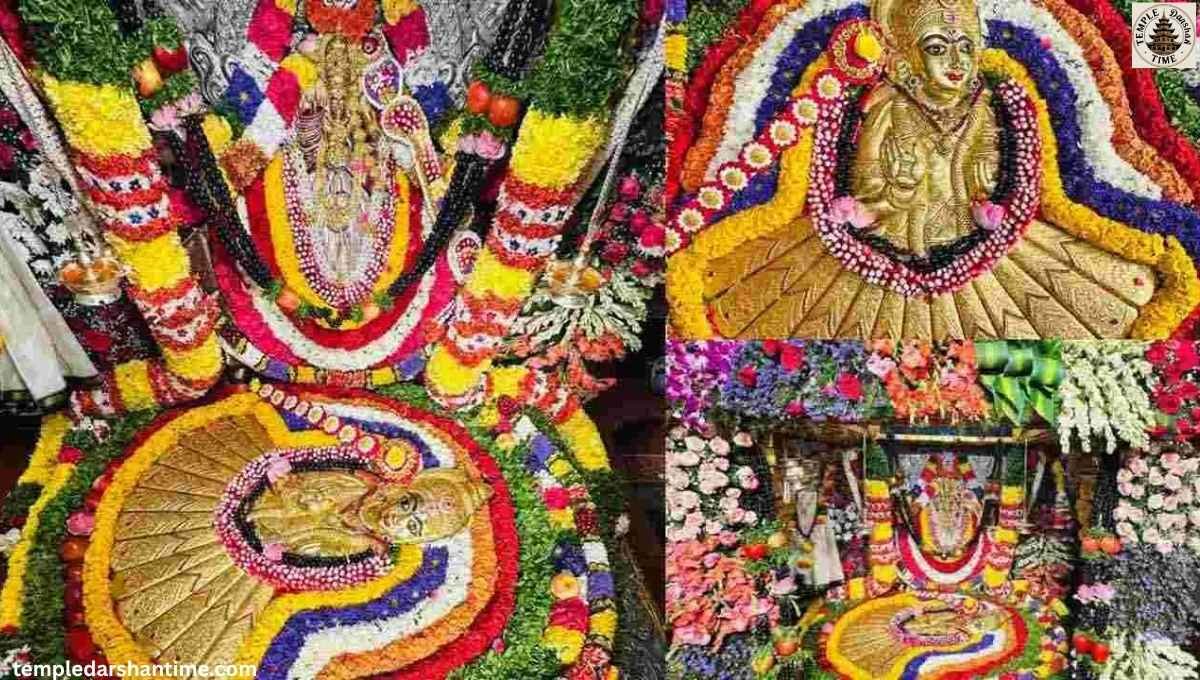
Balkampet Yellamma Temple is one of Hyderabad’s most sacred and visited Shakti shrines, dedicated to Goddess Renuka Yellamma Devi. Knowing the Balkampet Yellamma Temple timings helps every devotee plan a peaceful and fulfilling darshan experience. The temple follows morning timings from 5:00 AM to 12:30 PM and evening timings from 4:00 PM to 8:00 PM daily. Balkampet temple timings extend significantly during festivals like Bonalu, Yellamma Kalyanam, and Navaratri.
Always verify Balkampet Yellamma Temple timings today before visiting to avoid missing special poojas or sevas. Located near SR Nagar, Hyderabad, search Balkampet Yellamma Temple distance from my location on Google Maps for quick navigation. Balkampet Yellamma blesses every devoted soul who arrives with sincerity.
The Essence of Goddess Yellamma Devi
Goddess Yellamma Devi is a powerful manifestation of Shakti, worshipped across South India as the Divine Mother who protects, heals, and blesses her devotees.
She is identified as Renuka Devi, the wife of sage Jamadagni and the mother of Lord Parashurama, the sixth avatar of Lord Vishnu. The name “Yellamma” literally translates to “Mother of All,” reflecting her universal compassion.
Devotees from Telangana, Andhra Pradesh, Karnataka, and Maharashtra visit this Renuka Devi temple with deep faith. They believe the Goddess:
- Grants protection to families
- Heals physical and mental ailments
- Blesses women with fertility and marital harmony
- Removes negative energies and obstacles
A Spiritual Beacon in Hyderabad
The Balkampet temple Hyderabad sits in a spiritually charged atmosphere filled with chants, devotional music, and the aroma of flowers and incense. The temple creates an immersive experience that calms the mind and elevates the soul.
A Place of Faith and Healing
The sacred Tirtham (holy water) available at this Hyderabad Shakti temple is believed to have miraculous healing properties. Devotees collect this water as prasadam, especially during Bonalu, Ashada Masam, and Yellamma Kalyanam.
The Spiritual Magnet of Hyderabad
Thousands of pilgrims visit during major festivals each year. The temple serves as the focal point of Telangana’s religious and cultural identity, especially during the grand Bonalu celebrations.
History and Legends of Balkampet Yellamma Temple
The Legend of Goddess Yellamma (Renuka Devi)
According to Hindu mythology, Renuka Devi was renowned for extraordinary spiritual purity. She would collect water daily in a pot made of river sand, held together purely by the power of her devotion.
One day, her concentration briefly wavered, which caused her spiritual strength to falter. Her husband, sage Jamadagni, in his anger, commanded their son Parashurama to behead her. Parashurama obeyed, but later prayed deeply for forgiveness and asked his father to restore her life.
Jamadagni granted the boon, and Renuka Devi was reborn as Yellamma Talli, the ever-forgiving, nurturing mother goddess. This transformation story forms the spiritual foundation of every Yellamma temple across South India.
How the Temple Originated in Balkampet
Centuries ago, local villagers reportedly noticed mysterious lights and divine vibrations emanating from beneath the ground. Upon excavation, they discovered the idol of Yellamma Devi approximately ten feet below the surface.
Priests identified the deity as Goddess Renuka Yellamma Devi, and a temple was constructed over the sacred site. Local chieftains and kings later supported its expansion, turning it into a major pilgrimage destination.
Connection to Other Yellamma Temples in South India
Balkampet is among the five most significant Yellamma temples in South India:
| Temple Location | State | Significance |
| Saundatti | Karnataka | Oldest and original Yellamma Peetham |
| Badami | Karnataka | Cave temples and Yellamma worship |
| Yellampally | Andhra Pradesh | Traditional Renuka Devi rituals |
| Basavakalyan | Karnataka | Powerful Shakti Peetham |
| Balkampet | Telangana | Most visited urban Yellamma shrine |
This table highlights how Balkampet holds equal spiritual standing with ancient Yellamma pilgrimage centers across the Deccan region.
Historical Importance in Hyderabad’s Culture
The temple’s origins predate the founding of Hyderabad itself. During the Kakatiya Dynasty (12th to 14th centuries), Goddess Yellamma was worshipped as the guardian of women and villages across Telangana.
Even during the Nizam era, the temple continued to thrive, symbolizing Hyderabad’s tradition of cultural and religious coexistence. Today, it is managed by the Telangana Endowments Department.
Spiritual Belief and Legacy
Devotees widely believe that this Shakti temple Hyderabad holds miraculous healing powers. Many attest to recovery from health issues, resolution of family conflicts, and emotional healing after performing poojas here.
Fridays and Tuesdays are considered most auspicious, with women offering turmeric, bangles, and sarees to seek blessings for marriage, childbirth, and wellbeing.
Deity and Spiritual Significance of Balkampet Yellamma Temple
Who is Goddess Yellamma?
Goddess Yellamma Devi embodies cosmic feminine energy, or Shakti. She represents:
- Spiritual Power: The force that sustains the universe
- Compassion: She uplifts the downtrodden and protects the weak
- Empowerment: Encourages women to recognize their inner strength
- Renewal: Her transformation from Renuka to Yellamma symbolizes spiritual rebirth
The Idol of Goddess Yellamma at Balkampet
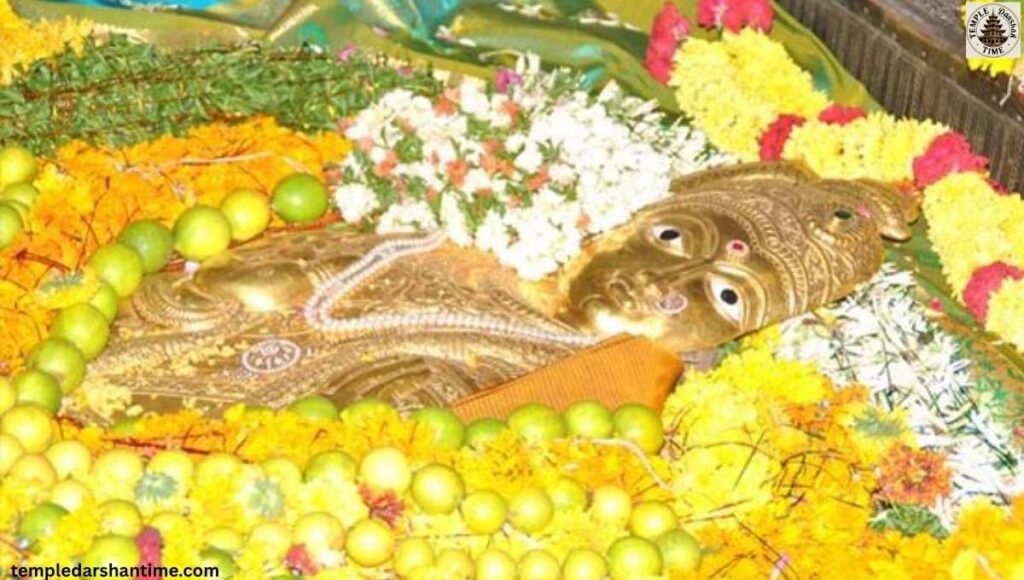
A uniquely remarkable feature of this temple is that the main idol is located approximately ten feet below ground level. This uncommon architectural feature carries deep meaning:
- It represents the humility and depth of the Goddess’s compassion
- Devotees must bow slightly to view her, symbolizing surrender and respect
- The Goddess is connected to Prithvi Tatva (earth element), representing fertility and healing
The black stone idol is adorned with fresh flowers, turmeric, vermilion, and silk sarees, radiating both divine strength and maternal warmth.
The Holy Water (Tirtham)
The natural spring beneath the sanctum is considered sacred. Devotees believe this holy water:
- Cures skin diseases and physical ailments
- Cleanses negative energy from the mind
- Brings peace and mental clarity
The water is especially sought after during Yellamma Kalyanam, Bonalu, and Ashada Masam festivals.
Symbolism of Yellamma Worship
Yellamma worship carries several layers of spiritual meaning:
- Transformation and renewal through devotion
- Universal compassion beyond caste or gender
- Protection from illness and evil forces
- Empowerment of feminine strength and dignity
Temple Timings and Darshan Schedule of Balkampet Yellamma Temple
Daily Temple Timings
The temple follows a structured daily schedule to accommodate thousands of devotees. Below are the standard Balkampet Yellamma Temple timings:
| Session | Opening Time | Closing Time |
| Morning Session | 5:00 AM | 12:30 PM |
| Evening Session | 4:00 PM | 8:00 PM |
On special days like Tuesdays, Fridays, Bonalu, and Yellamma Kalyanam, the temple stays open beyond regular hours to serve the large influx of devotees.
Balkampet Yellamma Temple Tuesday Timings
Tuesday is one of the most auspicious days dedicated to Goddess Shakti. On Tuesdays:
- Temple opens earlier, around 5:00 AM
- Special Kumkumarchana and Abhishekam are performed
- Large groups of women devotees offer turmeric, coconuts, and bangles
- Crowds are significantly higher than regular weekdays
- Devotees are advised to arrive before 7:00 AM for a crowd-free darshan
Balkampet Yellamma Temple Sunday Timings
Sundays attract a large number of family visitors and devotees performing special Abhishekam to remove negative energies:
- Temple opens at 5:00 AM
- Special Sunday Abhishekam timings begin around 6:00 AM
- Evening darshan continues until 8:00 PM
- Annadanam (free food service) is often available on Sundays
Morning Rituals (Suprabhata Seva and Alankarana)
The day at the temple begins with two key rituals:
- Suprabhata Seva (5:00 AM): Priests recite Vedic hymns and ring bells to awaken the Goddess
- Abhishekam (6:00 AM): Sacred bath with milk, turmeric, honey, and sandalwood
- Alankarana Seva (8:00 AM): The Goddess is adorned with silk sarees, flowers, and jewelry
Daily Pooja Schedule
The following table outlines the complete daily pooja schedule for devotee reference:
| Time | Seva / Ritual | Purpose |
| 5:00 AM | Suprabhata Seva | Awakening the Goddess with chants |
| 6:00 AM | Abhishekam | Sacred bath with holy materials |
| 7:00 AM to 9:00 AM | Alankarana and Archana | Decoration and flower offerings |
| 9:00 AM to 12:00 PM | Darshan Hours | Group and individual poojas |
| 12:00 PM | Noon Aarti and Naivedyam | Food offering and midday aarti |
| 12:30 PM | Temple Closure | Afternoon break |
| 4:00 PM | Evening Darshan Opens | Evening session begins |
| 6:30 PM | Maha Mangala Aarti | Evening aarti with camphor lamps |
| 8:00 PM | Temple Closes | Day ends |
Aarti Timings
Three main aartis take place daily:
- Morning Aarti: 6:30 AM
- Noon Aarti: 12:00 PM
- Maha Mangala Aarti (Evening Aarti): 6:30 PM
The evening aarti is the most spiritually vibrant, with oil lamps, camphor flames, and the chant “Yellamma Talli Jai!” filling the entire temple complex.
Balkampet Yellamma Temple Timings During Navratri
During the nine-day Navaratri festival, the temple operates on extended hours:
- Opens as early as 4:30 AM
- Continuous poojas honoring nine forms of Goddess Durga
- Special Devi Homams performed each evening
- Annadanam available throughout the festival days
- Temple remains open until 10:00 PM or later on key nights
Special Sevas and Booking Information
Devotees can book the following sevas at the pooja ticket counter or online through the Telangana Endowments Department portal:
| Seva Name | Cost |
| Abhishekam Seva | ₹300 |
| Kumkumarchana Seva | ₹100 |
| Alankarana Seva | ₹500 |
| Yellamma Kalyanam Ticket | ₹1000 |
| Annadanam Donation | Flexible |
Online seva booking is available, making it convenient for out-of-town devotees to pre-schedule their rituals before visiting.
Best Time for Darshan
For a peaceful and crowd-free darshan experience, consider these timing recommendations:
- Weekdays, 5:30 AM to 9:00 AM: Minimal crowds, serene atmosphere
- Ashada Masam (June to July): Best for Bonalu festival experience
- Chaitra Masam (March to April): Ideal for Yellamma Kalyanam
- Navaratri (September to October): Rich cultural programs and special poojas
Major Festivals Celebrated at Balkampet Yellamma Temple
Yellamma Kalyanam – The Divine Marriage Festival
This annual festival celebrates the divine wedding of Goddess Yellamma and Lord Keshava Swamy. It takes place during Chaitra Masam (March to April) and is the most celebrated event of the temple year.
Key highlights include:
- Early morning Abhishekam and Homam
- Bridal decoration of the Goddess with turmeric and jewelry
- Vedic chanting of Kalyana Mahotsavam rituals
- Temple open from early morning until midnight on the festival day
- Attendance believed to resolve fertility and family conflicts
Bonalu Festival – The Spirit of Telangana
Bonalu is Telangana’s most vibrant folk festival, celebrated during Ashada Masam. At Balkampet:
- Women carry decorated pots (Bonam) filled with rice, curd, and jaggery
- Pothuraju dancers and Dappu drummers perform in colorful processions
- The Ashada Jathara, a month-long spiritual celebration, runs alongside Bonalu
- Special poojas and Abhishekams are performed every Tuesday and Friday of the month
Navaratri and Dasara Festival
During Navaratri, the Goddess is dressed in nine different forms across nine days, including Mahalakshmi, Saraswati, Annapurna, and Balatripurasundari. On Vijaya Dashami (10th day), a grand Shobha Yatra procession is held.
Shankranti and Ugadi
- Makar Sankranti: Devotees offer fresh harvest grains and thank the Goddess for prosperity
- Ugadi (Telugu New Year): Prayers for a blessed and joyful new year cycle
Pournami (Full Moon Day) Abhishekams
Every full moon day is regarded as highly auspicious at this temple:
- Special Abhishekam with milk, honey, and turmeric
- Devi Mahatmyam chanting throughout the day
- Many devotees observe fasting and break it after the evening aarti
- Planetary dosha removal rituals performed by priests
Poojas, Sevas and Rituals at Balkampet Yellamma Temple
Daily Poojas and Rituals
The temple follows a disciplined ritual schedule each day:
- Suprabhata Seva (5:00 AM): Awakening the Goddess with Vedic chants
- Abhishekam (6:00 AM to 7:30 AM): Sacred bath for spiritual cleansing
- Alankarana Seva (8:00 AM): Floral and silk decoration of the deity
- Kumkumarchana (9:00 AM to 12:00 PM): 108 names of Yellamma recited with kumkum offerings
- Naivedyam and Maha Mangala Aarti (12:00 PM): Food offering and noon aarti
- Evening Maha Aarti (6:30 PM): Camphor lamps waved before the Goddess
Route Map and How to Reach Balkampet Yellamma Temple
The temple is located in Balkampet, near SR Nagar, Hyderabad, Telangana 500038. It sits between the well-known neighborhoods of Ameerpet and SR Nagar, making it accessible from all major city zones.
Balkampet Yellamma Temple Distance from Key Locations
| Starting Point | Distance | Approx. Travel Time |
| Ameerpet | 2 km | 5 to 10 minutes |
| SR Nagar | 1 km | 5 minutes |
| Begumpet | 4 km | 15 minutes |
| Secunderabad Railway Station | 9 km | 25 to 30 minutes |
| Hitech City | 10 km | 30 minutes |
| Rajiv Gandhi International Airport | 36 km | 50 to 60 minutes |
Balkampet Yellamma Temple Bus Number
TSRTC buses run regularly to the temple. Popular routes include:
- From Secunderabad: Bus numbers 10K, 47L, 218
- From Mehdipatnam: Bus numbers 9X, 47Y, 218
- From Kukatpally: Bus numbers 10H, 19M, 47K
The closest bus stop is the Balkampet Bus Stop, just a 2-minute walk from the temple entrance.
Also Read About: Secret to Perfect Visit? Masani Amman Temple Timings Revealed
By Metro (Most Convenient)
- SR Nagar Metro Station (Red Line): 1 km from the temple
- Ameerpet Metro Station: 2 km from the temple
From either station, an autorickshaw costs approximately ₹20 to ₹30. The metro is strongly recommended on festival days when road traffic is heavy.
Balkampet Yellamma Temple Location Summary
- Temple Name: Balkampet Yellamma Temple
- Deity: Goddess Renuka Yellamma Devi
- Address: Balkampet, near SR Nagar, Hyderabad, Telangana 500038
- Managed by: Telangana Endowments Department
- Google Maps: Search “Balkampet Yellamma Temple Hyderabad” for live navigation
The temple’s central location makes it one of the most accessible Shakti temples in Hyderabad, whether you are traveling by private vehicle, bus, metro, or taxi.
Frequently Asked Questions
Which day is good to visit Balkampet Yellamma Temple?
Tuesday and Friday are the most auspicious days. Balkampet Yellamma Temple timings on these days draw thousands of devoted women offering turmeric and bangles.
What is the time of Yellamma Temple?
Balkampet Yellamma Temple timings are 5:00 AM to 12:30 PM and 4:00 PM to 8:00 PM daily, including weekends and most festival days.
Which day is good for Peddamma Temple?
Friday is considered the most auspicious day for Peddamma Temple. Devotees visit early morning for special poojas and seek blessings from Goddess Peddamma.
Is Balkampet Yellamma Temple a shakti peeth?
Balkampet Yellamma Temple is one of South India’s five most significant Yellamma shrines, widely regarded as a powerful Shakti temple in Hyderabad.
What are the four most powerful shakti peeth?
The four most powerful Shakti Peethas are Kamakhya (Assam), Kolkata Kalighat (West Bengal), Hinglaj (Pakistan), and Vaishno Devi (Jammu and Kashmir).
What is Balkampet Yellamma Temple known for?
Balkampet Yellamma Temple is known for its idol located ten feet underground, miraculous holy water, grand Bonalu festival, and specific Balkampet Yellamma Temple timings attracting lakhs of devotees.
Conclusion
Balkampet Yellamma Temple stands as one of Hyderabad’s most powerful Shakti shrines, drawing millions of devoted pilgrims throughout the year. Balkampet Yellamma Temple timings run from 5:00 AM to 12:30 PM in the morning and 4:00 PM to 8:00 PM in the evening daily. Balkampet temple timings may extend during festivals like Bonalu, Yellamma Kalyanam, and Navaratri. Before heading out, always check Balkampet Yellamma Temple timings today to avoid inconvenience.
The temple sits near SR Nagar, Hyderabad, easily reachable by metro, bus, or road. Search Balkampet Yellamma Temple distance from my location on Google Maps for accurate live navigation. Tuesday and Friday mornings remain the most spiritually rewarding time to visit Balkampet Yellamma.

Michael Anderson is a spiritual content writer with 8+ years of experience documenting temple darshan timings across India. He has completed 100+ projects with 95% client satisfaction, helping thousands of devotees plan meaningful spiritual journeys.