

Planning a temple visit can get stressful when timings are unclear. Many devotees search for Ambaji Darshan Time because they don’t want to miss darshan after long travel or standing in queues. Questions about ambaji darshan time today, ambaji temple time, ambaji mandir darshan timing, and ambaji aarti time often create confusion, especially during weekends and festivals. If you’ve felt this uncertainty, you’re not alone.
This blog is written to clear all that confusion in one place. Here, you’ll find accurate timings, aarti details, and simple tips explained in an easy way so you can plan better. By the end of this guide on Ambaji Darshan Time, you’ll know exactly when to visit and how to make your darshan smooth and peaceful.
Ambaji Temple Darshan Timings
Knowing the correct ambaji temple time helps you plan your visit without any confusion or last-minute rush.
The temple follows a well-organized daily schedule that remains consistent throughout the week. Ambaji mandir darshan timing is divided into three main slots, morning, afternoon, and evening, giving devotees flexibility to choose according to their convenience and travel plans.
Morning darshan offers a calm and peaceful atmosphere perfect for prayer. Afternoon darshan suits those arriving later in the day. Evening darshan provides a divine experience with beautiful temple lighting and ongoing devotional activities.
| Darshan Slot | Timings |
| Morning Darshan | 07:00 AM to 11:30 AM |
| Afternoon Darshan | 12:30 PM to 04:30 PM |
| Evening Darshan | 06:30 PM to 09:00 PM |
| Weekly Schedule | Open All Days |
The temple opens daily at 7:00 AM and closes at 9:00 PM. There is no entry fee for darshan, making it accessible to all devotees regardless of their financial background. This free darshan policy reflects the temple’s welcoming spirit.
Arriving at least 30 minutes before your preferred slot is recommended, especially on weekends and festival days. During peak seasons like Navratri and Purnima, the temple witnesses heavy crowds, so early arrival ensures comfortable darshan without long waiting times.
Ambaji Aarti Timings
Aarti at Ambaji Temple is a soul-stirring spiritual experience that every devotee should witness during their visit.
The ambaji aarti time follows a fixed daily schedule, creating powerful moments of devotion and divine connection. During aarti, the entire temple atmosphere fills with devotional chants, ringing bells, and the fragrance of incense, creating an unforgettable spiritual experience.
Devotees gather in large numbers during both morning and evening aartis to participate in this sacred ritual. The sight of oil lamps being waved before the sacred Gokh, accompanied by traditional hymns dedicated to Maa Ambaji, creates deep emotional and spiritual impact.
| Aarti Type | Timings | Days |
| Morning Aarti | 06:00 AM | Daily |
| Evening Aarti | 06:00 PM | Daily |
The morning aarti marks an auspicious start to the day with peaceful prayers. The evening aarti offers a divine conclusion with beautiful lamp lighting and devotional songs echoing through the temple complex.
During special festivals like Navratri, Purnima, and other significant occasions, the temple management arranges additional special aartis. These festival aartis are grand celebrations with extended rituals, more elaborate decorations, and increased devotional fervor.
Ambaji Temple aarti time today remains consistent, but devotees visiting during festivals should check for any special timings announced by the temple trust. Participating in aarti is considered highly auspicious and spiritually rewarding.
Ambaji Temple Timings During Navratri
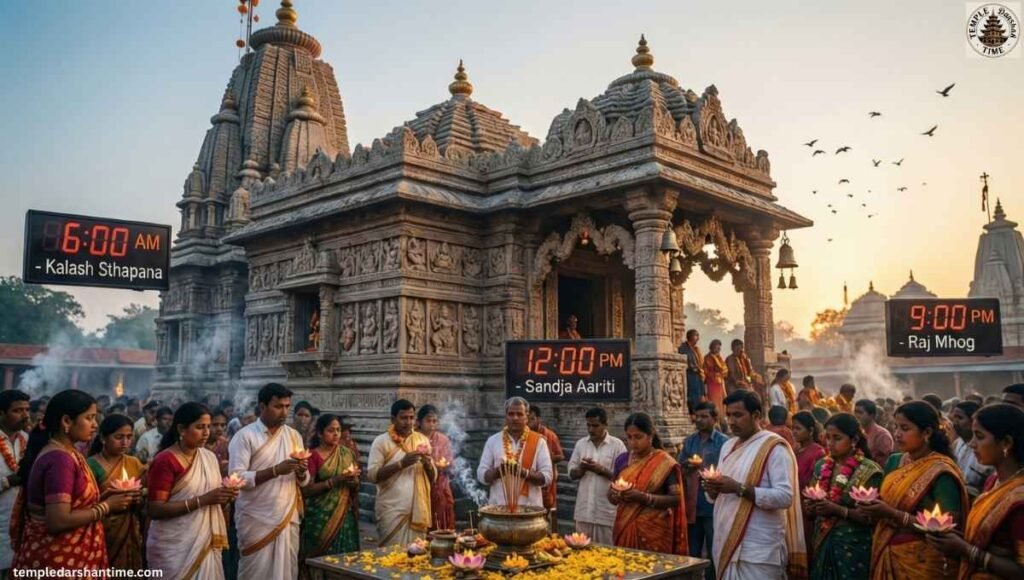
Navratri is the grandest and most spiritually charged festival celebrated at Ambaji Temple with unmatched devotion and energy.
During these nine holy days, the temple transforms into a vibrant center of faith, prayer, and celebration. Lakhs of devotees from Gujarat, Rajasthan, Madhya Pradesh, and other states arrive to seek Maa Ambaji’s divine blessings. The entire Ambaji town comes alive with bhajans, garba performances, special rituals, and continuous devotional activities.
Ambaji temple timings in navratri are significantly extended to accommodate the massive influx of pilgrims. The temple trust makes special arrangements including additional darshan counters, organized queue systems, extended hours, and extra security measures for devotee safety and convenience.
Special darshan slots are created during Navratri to manage crowds efficiently. Early morning darshan starts even before regular hours, and late-night darshan opportunities are also provided. Multiple aarti sessions are conducted throughout the day.
Important Navratri Visit Tips:
- Check official ambaji darshan time latest news before traveling
- Arrive extremely early or late at night to avoid peak rush hours
- Book accommodation well in advance as hotels fill up quickly
- Follow crowd management instructions from temple authorities
- Carry minimal luggage and avoid bringing prohibited items
The temple management usually announces updated Navratri schedules a few days before the festival begins. Devotees can contact the temple office or check official sources for confirmed ambaji temple timings during Navratri.
Visiting during Navratri is considered extraordinarily auspicious. The spiritual energy during these nine days is believed to be at its peak, making prayers and wishes more powerful and likely to be fulfilled by the divine mother.
Ambaji Bhojanalaya Timings and Food Details
The Shree Ambika Bhojanalaya, operated by Ambaji Mata Devasthan Trust, provides clean, affordable, and sattvic meals to visiting devotees.
This dining facility ensures that pilgrims don’t face any difficulty finding hygienic food options. The bhojanalaya serves traditional vegetarian thalis prepared following religious guidelines and maintaining high standards of cleanliness and taste.
Located conveniently close to the temple premises, devotees can easily access the dining hall without traveling far. This proximity is especially helpful for families with elderly members, children, or those who prefer staying near the temple campus.
| Service | Timings / Charges |
| Opening Hours | 10:00 AM to 10:00 PM |
| Full Meal | ₹165 |
| Children Meal (up to 10 years) | ₹115 |
| Full Meal with Sweet | ₹215 |
| Children Meal with Sweet (up to 10 years) | ₹165 |
The meals include fresh chapatis, rice, dal, sabzi, and other traditional items. All food is prepared hygienically in clean kitchens under proper supervision. The taste is simple yet satisfying, perfect for devotees seeking pure vegetarian food.
During Navratri and other peak pilgrimage seasons, the bhojanalaya becomes extremely valuable. When outside restaurants and hotels are overcrowded or charging premium prices, this trust-operated facility provides reliable and affordable dining solutions.
Families traveling with children particularly appreciate the separate children’s meal option at reduced rates. The sweet dish option adds a special touch to your meal, making it more satisfying and complete.
Spiritual Significance of Ambaji Temple
Ambaji Temple holds supreme spiritual importance in Hindu tradition as a powerful Shakti Peeth where cosmic divine energy resides.
According to ancient Hindu scriptures and mythology, this sacred site marks the spot where Goddess Sati’s heart fell after Lord Shiva carried her body across the universe. This mythological connection makes Ambaji one of the most revered pilgrimage destinations for Shakti worshippers.
Devotees believe that Maa Ambaji represents Adi Shakti, the primordial cosmic energy that creates, sustains, and transforms the entire universe. Praying at this temple is said to invoke the supreme mother’s blessings for protection, strength, prosperity, and spiritual growth.
Many pilgrims visit Ambaji during difficult life phases seeking divine intervention. The temple is famous for fulfilling genuine wishes and removing obstacles from devotees’ paths. Stories of miraculous experiences and answered prayers are commonly shared among faithful visitors.
The spiritual atmosphere at Ambaji is palpably powerful. Even first-time visitors often report feeling unusual peace, positive energy, and emotional connection during darshan. This divine presence makes the temple experience transformative beyond just ritual worship.
During Navratri, the spiritual significance multiplies manifold. The nine days dedicated to the divine feminine are considered the most auspicious time for seeking blessings. The entire environment resonates with devotion, making prayers more focused and spiritually effective.
Regular visits to Ambaji are believed to purify negative karma and attract positive life changes. The temple’s reputation for granting protection from evil forces and negative energies draws devotees seeking spiritual shielding.
Ambaji Temple Architecture and Layout
The Ambaji Temple complex showcases beautiful traditional Indian temple architecture blended with modern construction techniques and spiritual design principles.
The newly constructed Nij Mandir (main temple) stands as a magnificent example of sacred architecture. Built with premium quality marble, the temple features intricate carvings, detailed artwork, and spiritual symbolism in every structural element.
The temple layout includes several important sections designed for different religious purposes. The spacious Mandap serves as a gathering area where devotees assemble for prayers, bhajans, and special ceremonies. This hall can accommodate large numbers during festivals.
The Garbhgruh (sanctum sanctorum) houses the sacred Gokh, the most holy space where the Shree Yantra resides. This innermost chamber maintains strict spiritual purity and is designed to preserve the divine energy concentrated within.
Chachar Chowk, finished with elegant marble flooring, serves as the spiritual heart of the temple complex. Most major rituals, special pujas, and religious ceremonies are conducted in this beautifully designed open area. The marble work reflects light beautifully, creating a divine visual atmosphere.
Near the temple stands a well-organized Yagnashala where sacred fire rituals (havans and yagnas) are performed during festivals and auspicious occasions. This designated space ensures proper Vedic ceremonies can be conducted following traditional guidelines.
The temple’s crowning glory is the magnificent golden Kalash positioned atop the main structure at 103 feet height. This massive Kalash weighs over three tonnes and was carved from a single marble stone brought from Arasur Hill. The entire Kalash is gold-plated, making it shine brilliantly under sunlight.
A sacred flag and Trishul (trident) are attached to the Kalash, symbolizing divine protection and the goddess’s power. This impressive structure can be seen from far distances, serving as a beacon for approaching devotees.
A Temple Without an Idol
Ambaji Temple stands absolutely unique among Indian temples due to one extraordinary feature, there is no physical idol of the goddess in the sanctum.
Instead of a traditional murti (idol), devotees worship the Shree Yantra, also called Shakti Visa Yantra. This sacred geometric pattern represents the goddess’s cosmic energy in pure symbolic form, making Ambaji’s worship tradition distinctly different and spiritually profound.
Inside the main sanctum lies a small cave-like sacred space known as the Gokh. Within this Gokh rests a gold-plated Shree Yantra inscribed with 51 Bijpatras (mystical syllables). These 51 symbols correspond to the 51 Shakti Peeths scattered across the Indian subcontinent.
The Shree Yantra is the primary object of worship and devotion during darshan. Devotees can view this sacred yantra through the opening, but interestingly, it has never been photographed. This maintains its spiritual purity, mystery, and sacred sanctity.
This rare tradition of worshipping a yantra instead of an idol makes Ambaji Temple truly exceptional. Very few temples in India follow this ancient practice, which is rooted in tantric traditions and Vedic symbolism of the divine feminine.
The absence of a physical form encourages devotees to connect with the goddess’s formless cosmic energy rather than a limited physical representation. This philosophical approach represents a higher level of spiritual understanding and worship.
Scholars and spiritual seekers find this unique feature particularly fascinating. It demonstrates how divine presence can be invoked and worshipped through sacred geometry, mantras, and energy patterns rather than only through human-like forms.
Ambaji Ropeway Service at Gabbar Hill
For devotees wishing to visit the sacred Gabbar Hill but unable to climb 999 steps, Ambaji offers a convenient and safe ropeway service.
Popularly known as Udan Khatola (flying cradle), this ropeway was established in 1998 specifically to help elderly devotees, children, physically challenged individuals, and those with health concerns reach the hilltop temple comfortably.
The ropeway journey takes just a few minutes, transporting visitors directly to Gabbar Hill’s peak. During the ride, passengers enjoy breathtaking panoramic views of the Aravalli mountain ranges, lush green forests, valleys, and the scenic landscape surrounding Ambaji.
The ropeway system is regularly maintained following strict safety standards and protocols. Trained operators manage the service, and all safety equipment is checked frequently. This makes it one of the most reliable and preferred transportation options for reaching Gabbar Tirth.
During peak pilgrimage seasons like Navratri and Purnima (full moon) days, the ropeway experiences heavy demand. Arriving early helps avoid long waiting queues. The service operates throughout the day with brief breaks for maintenance.
Gabbar Hill holds its own spiritual significance and is considered an important part of the complete Ambaji pilgrimage. The hilltop offers stunning sunset views and a peaceful environment perfect for meditation and prayer.
Families with young children and senior citizens particularly appreciate this facility. It eliminates the physical strain of climbing hundreds of steps while still allowing complete darshan and spiritual fulfillment.
Festivals Celebrated at Ambaji Temple
Ambaji Temple celebrates numerous religious festivals throughout the year, each bringing unique spiritual energy and cultural vibrancy to the town.
These festivals transform the temple and surrounding areas into hubs of devotion, faith, traditional music, dance, and religious ceremonies. Each celebration attracts thousands of devoted pilgrims from across India.
Major Festivals at Ambaji:
- Aswin Sud Navratri (Autumn Navratri – most grand)
- Chaitra Navratri (Spring Navratri)
- Bhadrapad Poonam Mela (Full moon fair)
- Posh Sud Poonam (Winter full moon)
- Kartik Sud (Kartik month celebration)
- Shravan Vad Amas (Monsoon new moon)
Among all festivals, Navratri stands supreme as the most spiritually powerful and grandly celebrated event. During these nine sacred days, the temple witnesses its highest annual footfall with lakhs of devotees arriving from Gujarat, Rajasthan, Madhya Pradesh, Maharashtra, and other states.
The entire Ambaji town transforms during Navratri. Continuous bhajan singing, traditional garba dance performances, special decorations, illuminations, and extended temple hours create an intensely devotional atmosphere that pilgrims remember for life.
Purnima (full moon) days hold special importance at Ambaji throughout the year. Devotees believe visiting the temple on full moon nights brings extra blessings and positive energy. Special aartis and extended darshan hours are arranged on these days.
During major festivals, the temple trust organizes additional facilities including extra prasad distribution, increased food services at the bhojanalaya, special accommodation arrangements, medical camps, and enhanced security for devotee safety.
Cultural programs featuring devotional music, traditional dances, and spiritual discourses are also organized during festivals. These events enhance the spiritual experience and provide devotees with deeper understanding of the goddess’s significance.
Places to Visit Near Ambaji Temple
An Ambaji pilgrimage offers opportunities to explore several beautiful spiritual, natural, and historically significant places in the surrounding region.
Visiting these nearby attractions adds richness to your spiritual journey and provides peaceful environments for relaxation and reflection. Many devotees prefer spending 2-3 days in Ambaji to explore the area completely.
Popular Nearby Attractions:
- Kailash Hill Sunset Point – Famous for stunning evening views and peaceful atmosphere
- Mangalya Van – Beautiful green nature park perfect for relaxation
- Kamakshi Mandir – Another powerful Shakti temple nearby
- Mansarovar – Serene water body ideal for peaceful moments
- Koteshwar – Ancient Lord Shiva temple with historical importance
- Marble Mines – Fascinating white marble rock formations
- Kumbharia Dera – Historic group of beautifully carved Jain temples
- Someshwar – Quiet spiritual location for meditation
- Kumbhleshwar Mahadev Temple – Sacred Shiva shrine
- Siteseen – Peaceful spot surrounded by natural beauty
Gabbar Hill, located close to the main temple, deserves special mention as an integral part of the Ambaji pilgrimage. The 999-step climb or ropeway ride to the hilltop temple offers spiritual fulfillment and spectacular views.
Mount Abu, Rajasthan’s only hill station, lies approximately 45 kilometers from Ambaji. Many devotees combine their Ambaji visit with Mount Abu sightseeing, exploring Nakki Lake, Dilwara Temples, Guru Shikhar, and other attractions.
These surrounding places make ambaji temple distance from various attractions very manageable for day trips. Hiring a local taxi or using personal vehicles makes visiting multiple sites convenient and flexible according to your schedule.
Accommodation Options in Ambaji
Ambaji offers diverse accommodation options catering to different budgets and comfort requirements, ensuring every devotee finds suitable lodging during their pilgrimage.
Most staying facilities are located within walking distance of the temple, minimizing travel hassle and allowing devotees to focus on spiritual activities. The proximity to Ambaji Temple makes morning and evening darshan extremely convenient.
Budget-conscious pilgrims can choose from numerous dharamshalas and ashrams operated by temple trusts and religious organizations. These facilities provide clean, basic accommodation with essential amenities at very affordable rates, perfect for families and senior citizens.
Popular Accommodation Options:
- Parvati Pranam Dharamshala – Known for cleanliness and peaceful environment
- Ambaji Shakti Pathikashram – Trusted pilgrim lodge with good facilities
- Nandni Ashram – Budget-friendly option suitable for families
- Sitaba Sadan – Simple, comfortable rooms close to temple
- Shree Ganesh Bhavan – Convenient location with basic amenities
For devotees preferring more comfort, several budget and mid-range hotels operate in Ambaji town. These hotels offer better furnishing, attached bathrooms, room service, and additional facilities while remaining reasonably priced.
During peak seasons, especially Navratri, Purnima, and other major festivals, accommodation demand skyrockets. Rooms fill up weeks in advance, sometimes even months before Navratri. Advance booking is absolutely essential during these periods to avoid last-minute accommodation crisis.
The temple trust also makes special temporary accommodation arrangements during Navratri, including tent cities and dormitory-style mass lodging to handle the extraordinary crowd influx.
Many dharamshalas maintain donation-based or minimal-charge policies, making pilgrimage accessible to economically weaker devotees. This aligns with the spiritual principle of serving devotees regardless of financial status.
Also Read About: ISKCON Temple Chennai: Darshan Timings 2026, Aarti Schedule & Pooja Details
How to Reach Ambaji Temple
Ambaji Temple enjoys excellent connectivity through multiple transportation modes, making the pilgrimage accessible from various parts of India.
The temple’s location in Gujarat near the Rajasthan border allows convenient access from both states and neighboring regions. Well-maintained roads, nearby railway stations, and airports ensure smooth travel planning for devotees from distant locations.
Whether traveling from major Gujarat cities like Ahmedabad, Surat, Vadodara, or from Rajasthan cities like Jaipur, Udaipur, and Jodhpur, reaching Ambaji is straightforward. Multiple travel options let devotees choose according to their budget, time availability, and comfort preferences.
Reaching Ambaji Temple by Air
For devotees traveling from far distances or preferring air travel, the nearest airport is Sardar Vallabhbhai Patel International Airport in Ahmedabad.
Ambaji temple distance from Ahmedabad Airport is approximately 175 kilometers. The airport is well-connected to major Indian cities including Delhi, Mumbai, Bangalore, Chennai, Kolkata, and numerous international destinations.
From the airport, devotees have multiple onward travel options. Private taxis and cabs are readily available outside the terminal building, offering direct, comfortable transportation to Ambaji. The road journey takes approximately 3.5 to 4 hours depending on traffic conditions.
State transport and private buses also operate from Ahmedabad to Ambaji, though these require traveling to the city’s bus terminals first. This option is more economical but takes longer overall travel time.
Pre-booking taxis from Ahmedabad Airport to Ambaji is recommended, especially during festival seasons. Online cab services like Ola, Uber, and local taxi operators provide advance booking facilities with fixed pricing.
The road from Ahmedabad to Ambaji passes through scenic Gujarat countryside. The journey itself offers pleasant views, making travel comfortable and enjoyable rather than tiring.
Reaching Ambaji Temple by Train
Rail travel remains one of the most popular and economical options for devotees visiting Ambaji Temple from various parts of India.
The nearest railway station is Abu Road Railway Station, located approximately 21 kilometers from Ambaji Temple. Abu Road is a major junction on the Western Railway network, ensuring excellent connectivity to numerous cities.
Direct trains connect Abu Road with Delhi, Mumbai, Jaipur, Ahmedabad, Jodhpur, Indore, Bhopal, and many other major cities. This makes train travel convenient for devotees from North India, West India, and Central India regions.
From Abu Road station, reaching Ambaji is extremely easy and quick. Regular taxis, shared jeeps, auto-rickshaws, and local buses operate continuously throughout the day. The journey takes merely 30-40 minutes covering the short 21-kilometer distance.
During peak pilgrimage seasons like Navratri, additional passenger trains and special darshan trains are sometimes operated by Indian Railways to handle increased rush. These special services directly cater to Ambaji-bound pilgrims.
Pre-booking train tickets well in advance is strongly recommended, especially for festival periods when demand significantly exceeds availability. Tatkal booking schemes can help secure last-minute tickets if advance booking wasn’t possible.
Abu Road station has basic facilities including waiting rooms, refreshment stalls, and cloak rooms. Devotees can freshen up before proceeding to Ambaji for temple darshan.
Reaching Ambaji Temple by Road
Road travel is the most flexible and popular option for reaching Ambaji Temple, especially for devotees from nearby Gujarat and Rajasthan regions.
Ambaji has a well-developed bus station located just 1 kilometer from the temple premises. This proximity makes bus travel extremely convenient, devotees can walk to the temple within minutes of arrival.
Gujarat State Road Transport Corporation (GSRTC) operates frequent, regular bus services from major cities including Ahmedabad, Vadodara, Surat, Rajkot, Gandhinagar, Mehsana, and Palanpur. These buses are comfortable, affordable, and maintain reliable schedules.
Rajasthan State Road Transport Corporation (RSRTC) also runs buses from Rajasthan cities like Jaipur, Jodhpur, Udaipur, and Mount Abu. The Mount Abu to Ambaji route is particularly popular as many devotees visit both destinations in one trip.
Private bus operators and travel agencies provide luxury coaches, semi-sleeper, and sleeper buses for longer journeys. These offer better comfort for overnight travel compared to standard state transport buses.
Devotees traveling by personal car or two-wheeler enjoy maximum flexibility. The roads leading to Ambaji are well-maintained, properly signposted, and safe for family travel. Adequate parking facilities are available near the temple complex.
The scenic drive through Aravalli hills makes road travel to Ambaji pleasant and visually enjoyable. The journey offers beautiful landscapes, especially during and after monsoon season when the region turns lush green.
Distance of Ambaji Temple from Major Cities
Understanding ambaji temple distance from various major cities helps devotees plan travel time, budget, and preferred transportation mode effectively.
Here are accurate distances from important cities to Ambaji Temple:
| City | Distance from Ambaji |
| Ahmedabad | 184 km |
| Vadodara | 284 km |
| Rajkot | 373 km |
| Surat | Approximately 380 km |
| Dwarka | 603 km |
| Mount Abu | 45 km |
| Palanpur | 65 km |
| Jaipur | Approximately 410 km |
| Udaipur | Approximately 180 km |
Ambaji temple timings Surat travelers should note: The journey takes approximately 7-8 hours by road, making it suitable for overnight bus travel or early morning departure for same-day return.
From Ahmedabad, the most common route, devotees can comfortably reach Ambaji in 3.5 to 4.5 hours depending on traffic and stops. Morning departures allow full-day temple visit with evening return.
The relatively short 45-kilometer distance from Mount Abu makes combined pilgrimage very popular. Devotees often visit the famous Dilwara Jain Temples and Nakki Lake in Mount Abu before or after Ambaji darshan.
These distances help in planning fuel costs for personal vehicles, estimating taxi charges, or choosing appropriate bus timings. Knowing travel duration also assists in booking suitable ambaji darshan time slots based on arrival time.
Ambaji Temple Contact Information
Having accurate ambaji temple contact number and official contact details ensures devotees can get authentic information directly from temple authorities.
The Ambaji Mata Devasthan Trust manages the temple and provides information regarding darshan schedules, special events, accommodation facilities, bhojanalaya services, and festival arrangements.
| Contact Type | Details |
| Temple Address | Ambaji, Taluka Danta, District Banaskantha, Gujarat – 385110 |
| Administrator Phone | 02749-262236 |
| Contact Office Phone | 02749-262930 |
| Fax Numbers | 02749-264536, 02749-262931 |
| Official Email | ambajitempletrust@gmail.com |
Devotees can contact these numbers for inquiries about ambaji temple open or closed today, special occasion timings, current crowd situation, or any specific questions regarding their visit.
For latest updates on ambaji temple timings tomorrow, especially during festivals or special religious occasions, calling the office number provides most accurate real-time information.
The temple trust sometimes announces temporary schedule changes, special darshan arrangements, or important visitor guidelines through these official channels. Staying updated prevents last-minute confusion or wasted travel.
During Navratri, the temple office remains extra vigilant in providing crowd management updates, alternative darshan timings, and safety advisories to ensure smooth pilgrimage experience for all devotees.
Email communication works best for detailed inquiries, accommodation booking assistance, special puja arrangements, or group pilgrimage coordination requiring written responses and confirmations.
Ambaji Temple Open or Closed Today
Devotees planning same-day visits often search for ambaji temple open or closed today to confirm current operational status before traveling.
Ambaji Temple remains open every day throughout the year with consistent daily timings. The temple does not close on any particular weekday or for regular maintenance, ensuring devotees can visit any day they choose.
However, on extremely rare occasions during emergency situations, natural calamities, or government-imposed restrictions (like during pandemic lockdowns), temporary closures might occur. Such instances are highly exceptional and immediately announced through official channels.
For ambaji darshan time today, the standard schedule applies unless special festival or religious occasion modifications are announced. Morning darshan starts at 7:00 AM, afternoon darshan from 12:30 PM, and evening darshan from 6:30 PM daily.
Checking the day’s specific timings becomes important during major festivals, especially Navratri, when extended hours and additional darshan slots are created. The ambaji temple aarti time today during festivals might include extra sessions beyond regular morning and evening schedules.
The temple trust maintains updated information on their official communication channels. Calling the ambaji temple contact number provides immediate confirmation of current operational status and any special arrangements for that particular day.
Ambaji Temple Timings Tomorrow
Planning next-day visits requires knowing ambaji temple timings tomorrow, especially when traveling from distant locations requiring overnight journeys.
The temple follows consistent daily timings throughout the week, making tomorrow’s schedule predictable under normal circumstances. Standard darshan slots, morning (7:00 AM-11:30 AM), afternoon (12:30 PM-4:30 PM), and evening (6:30 PM-9:00 PM), remain unchanged on regular days.
However, if tomorrow coincides with a significant religious occasion, festival, Purnima, or special celebration, timings might be extended or modified. Checking official announcements helps avoid any confusion.
For devotees traveling overnight by bus or train, knowing tomorrow’s opening time ensures proper arrival planning. Early morning arrivals can directly proceed for morning darshan starting at 7:00 AM.
The ambaji aarti time tomorrow remains at 6:00 AM (morning) and 6:00 PM (evening) under normal schedule. If special aartis are planned for tomorrow due to auspicious occasions, temple authorities announce these in advance.
Advance confirmation becomes especially crucial during Navratri season when daily schedules can vary based on the specific Navratri day, crowd expectations, and special ritual timings.
Also Read About: Trimbakeshwar Temple Darshan 2026 Online Booking, VIP Pass, Timings, Tickets, and Official Guide
Ambaji Temple Aarti Time Today
Knowing the ambaji temple aarti time today helps devotees plan their visit to witness this powerful spiritual ceremony.
Under regular schedule, morning aarti occurs at 6:00 AM and evening aarti at 6:00 PM daily. However, on special religious occasions, additional aartis might be conducted, making it valuable to confirm today’s complete aarti schedule.
Reaching the temple 15-20 minutes before aarti time is recommended to secure a good viewing position, especially during weekends and festive periods when crowds increase significantly.
Morning aarti attendance requires early arrival, but devotees appreciate the peaceful, fresh atmosphere and spiritual energy present during dawn prayers. The experience of witnessing sunrise prayers at this sacred Shakti Peeth creates lasting spiritual memories.
Evening aarti draws larger crowds as devotees find evening visits more convenient after daytime activities. The visual spectacle of lamps being lit, bells ringing, and devotional songs filling the temple complex creates an intensely devotional atmosphere.
During Navratri and other major festivals, multiple aarti sessions throughout the day provide more opportunities for participation. These special occasions feature more elaborate rituals, increased decorations, and heightened spiritual fervor.
Ambaji Darshan Time Latest News
Staying updated with ambaji darshan time latest news ensures devotees have current information about any schedule changes, special arrangements, or important announcements.
The temple trust occasionally modifies timings for upcoming festivals, announces new facilities, or issues crowd management guidelines that affect darshan planning. Following official sources keeps devotees informed about such updates.
During major festivals, especially Navratri, the temple management releases detailed schedules, special darshan arrangements, parking information, security guidelines, and other important visitor advisories through official channels and local media.
Recent infrastructure improvements, new facilities like improved ropeway services, additional accommodation options, enhanced security measures, or upgraded amenities are also announced as latest news for devotee convenience.
Government regulations, travel advisories, weather-related updates affecting pilgrimage routes, or seasonal considerations are communicated through official temple channels to ensure safe and comfortable visits.
Devotees can check the official temple website, social media pages, or contact the temple office directly for most current and authentic latest news. Local Gujarat newspapers and devotional news platforms also regularly cover Ambaji Temple updates.
Advance planning combined with checking latest news ensures smooth pilgrimage experience without unexpected surprises or last-minute difficulties during your sacred Ambaji Temple visit.
Frequently Asked Questions
What is the timing of darshan at Ambaji Temple?
Ambaji Darshan Time is from 7 AM to 11:30 AM, 12:30 PM to 9 PM.
Is Ambaji Mandir closed?
No, Ambaji Mandir stays open daily, and Ambaji Darshan Time is available all seven days.
How much time does it take to visit Ambaji Temple?
Usually one to two hours are enough, depending on crowds and Ambaji Darshan Time slots.
What is the timing of ropeway in Ambaji?
Ambaji ropeway runs daily from morning till evening, matching convenient Ambaji Darshan Time plans for.
What is the best time to visit Ambaji?
Early morning is best for peace, fresh air, and smoother Ambaji Darshan Time experience overall.
Is mobile allowed in Ambaji Mandir?
Mobile phones are not allowed inside; follow rules to maintain sacred Ambaji Darshan Time discipline.
Conclusion
Knowing the Ambaji Darshan Time helps devotees plan a calm and smooth temple visit. Many people search for ambaji darshan time before traveling to avoid confusion. Checking ambaji darshan time today is useful during weekends and festivals. The ambaji temple time is fixed, but crowds can change waiting hours. Understanding ambaji mandir darshan timing saves effort and reduces stress. Devotees also ask about ambaji aarti time to join prayers peacefully. Clear timing details make the journey more meaningful and relaxed.
This guide explains Ambaji Darshan Time in simple words for all visitors. You will learn daily darshan hours, aarti schedule, and the best visiting slots. Details about ambaji temple time help families and elderly pilgrims. Updates on ambaji darshan time today make planning easier. Information on ambaji mandir darshan timing avoids last-minute rush. A clear idea of ambaji aarti time improves the spiritual experience.
In conclusion, following Ambaji Darshan Time ensures a peaceful, organized, and truly divine temple visit.

Michael Anderson is a spiritual content writer with 8+ years of experience documenting temple darshan timings across India. He has completed 100+ projects with 95% client satisfaction, helping thousands of devotees plan meaningful spiritual journeys.