
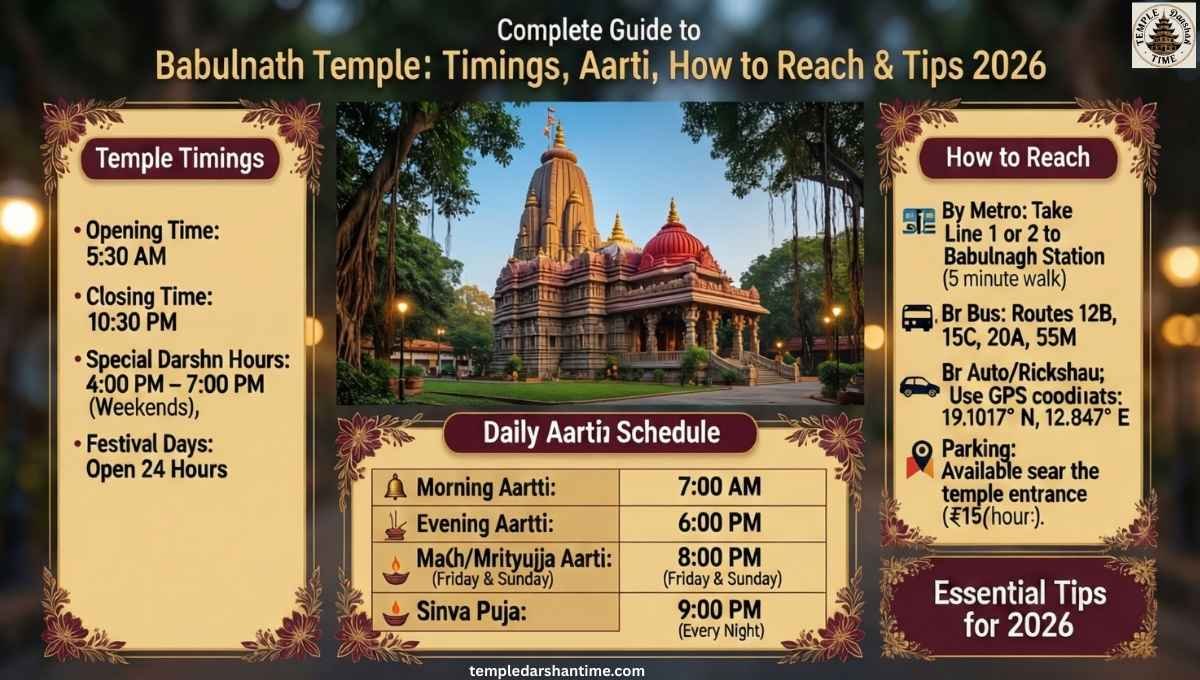
Planning a visit to Babulnath Temple can feel confusing at first, especially when you’re trying to figure out things like Babulnath Temple tickets, Babulnath temple Timings, and the Babulnath Temple opening time all at once. Many people also wonder where exactly Babulnath temple malabar hill is, which is the Babulnath Temple nearest station, and whether checking Babulnath Temple photos online really shows what the place feels like in person. Add questions about Babulnath temple history and exact Babulnath Temple Aarti timings, and it’s easy to feel overwhelmed before you even start your journey.
In this complete guide to Babulnath Temple, you’ll find everything clearly explained in one place so you don’t have to search multiple sources. From accurate timings and aarti details to location tips, history highlights, and practical advice for a smooth visit, this blog is designed to save you time and effort. Whether you’re visiting for devotion, curiosity, or peaceful reflection, you’ll know exactly what to expect before you go, and how to make the most of your experience.
Babulnath Temple Timings – Daily Visit, Aarti Schedule, and Special Days
Understanding the timing this temple follows helps you plan your visit perfectly. The temple maintains consistent daily hours throughout the week for devotee convenience.
The Babulnath temple timings remain the same on all regular days, making it easy to schedule your darshan. Morning hours are ideal for peaceful prayers, while evening aartis attract larger crowds. The temple administration ensures smooth operations from dawn to late night.
Special occasions like Mondays, Shravan month, and Mahashivratri see extended hours and additional rituals. Knowing these timings helps you participate in sacred ceremonies and avoid unnecessary waiting. The temple staff maintains strict schedules for all aartis and poojas throughout the day.
Daily Temple Timings
The Babulnath mandir timings remain consistent every day of the week. This regularity makes it convenient for regular devotees and first-time visitors alike.
| Day | Temple Opening Time | Closing Time |
| Monday to Sunday | 5:30 AM | 10:00 PM |
The temple opens early at 5:30 AM for Mangala Aarti and morning prayers. Devotees can visit throughout the day for darshan and pooja services. The gates close at 10:00 PM after the final night aarti ceremony.
Early morning visits offer a calm and peaceful atmosphere perfect for meditation. Afternoon hours see moderate crowds, ideal for family visits. Evening hours become busier as working professionals and students come for darshan after their daily routines.
Morning and Evening Aarti Timings
Participating in aartis enhances your spiritual experience at the temple. The Babulnath temple aarti timings are scheduled throughout the day to accommodate different devotees.
| Aarti Name | Timing |
| Mangala Aarti | 4:45 AM – 5:00 AM |
| Morning Aarti | 6:30 AM – 7:00 AM |
| Noon Aarti | 12:00 PM – 12:30 PM |
| Evening Aarti | 6:30 PM – 7:00 PM |
| Shringar Aarti | 8:30 PM – 9:00 PM |
| Shej Aarti (Night) | 9:45 PM – 10:00 PM |
The morning aarti provides a spiritually uplifting start to your day. Evening aarti features elaborate rituals with lamps, bells, and devotional songs. Attending any aarti session allows you to witness the divine energy and devotional fervor of fellow worshippers.
Mangala Aarti happens before sunrise when the Shivling is awakened with sacred chants. Shringar Aarti in the evening showcases beautiful decorations and offerings. The final Shej Aarti marks the deity’s rest time with soothing prayers and peaceful ambiance.
Babulnath Temple Timings on Sunday
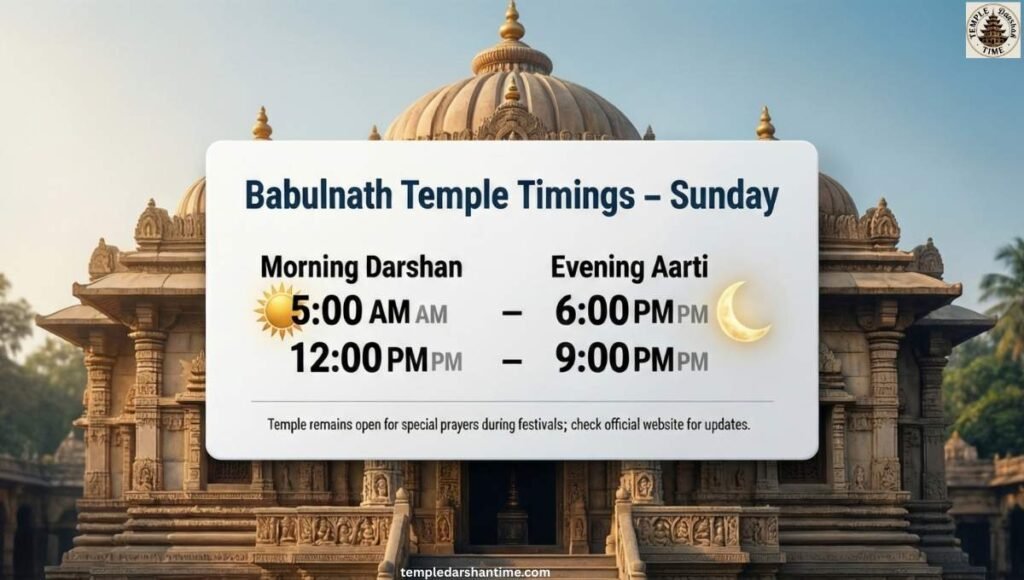
Sundays attract families and groups who visit together for darshan. The temple maintains its regular schedule without any special changes.
Sunday Timings: 5:30 AM – 10:00 PM
Weekend crowds tend to be larger, especially during morning and evening aarti hours. Arriving early helps you avoid long queues and enjoy peaceful darshan. The temple premises remain clean and well-organized even during peak visitor hours.
Many devotees prefer Sunday mornings for Jal Abhishek and special poojas. The temple staff efficiently manages the crowd flow during busy hours. VIP darshan options are available for those seeking quicker access to the main shrine.
Babulnath Temple Timings on Monday
Monday darshan at Babulnath Temple holds special significance for Shiva devotees. This day sees maximum footfall as it’s considered highly auspicious for Lord Shiva worship.
Monday Timings: 5:30 AM – 10:00 PM
Devotees fast and offer milk, bel leaves, and flowers to the Shivling on Mondays. The temple conducts additional abhishek ceremonies throughout the day. Special arrangements are made to accommodate the increased number of visitors.
Morning hours on Monday witness devotees queuing up for darshan before starting their workday. Evening sessions become particularly crowded with people coming after office hours. Planning your visit early morning or late evening helps you avoid peak rush times.
Special Timings During Shravan Month
Shravan month (July-August) is the holiest period for Lord Shiva devotees. The temple extends its hours and conducts special rituals throughout this auspicious month.
Shravan Month Timings: 5:30 AM – 10:30 PM (Extended by 30 minutes)
| Event | Timing |
| Morning Aarti | 5:30 AM – 6:30 AM |
| Evening Aarti | 6:30 PM – 8:30 PM |
| Temple Closes | 10:30 PM |
Shravan Monday Shiva temple visits are believed to bring immense blessings and spiritual merit. Thousands of devotees perform Kanwar Yatra, carrying holy Ganges water to offer at the Shivling. The temple organizes continuous abhishek ceremonies and distributes prasad throughout the month.
Special decorations with flowers and lights transform the temple into a divine spectacle. Priests perform extended rituals and chant Vedic mantras during morning and evening sessions. Many devotees observe fasts and visit the temple every Monday during this sacred month.
Babulnath Temple Timings on Mahashivratri
Mahashivratri celebrations Mumbai reach their peak at Babulnath Temple with overnight worship sessions. This is the biggest festival celebrated with great devotion and grandeur.
Mahashivratri Special Timings:
- Temple Opens: 4:00 AM
- Continuous Darshan: All day and night
- Temple Closes: Next day at 6:00 AM
The temple remains open for 26 hours straight during Mahashivratri. Devotees queue up throughout the night for darshan and abhishek. Special poojas are performed every three hours with elaborate rituals and offerings.
VIP darshan and group bookings are highly recommended during this festival. The temple witnesses lakhs of devotees, making crowd management a priority. Cultural programs, bhajan sessions, and prasad distribution continue throughout the night.
Arriving before midnight helps you complete darshan without excessive waiting. The temple provides drinking water and basic facilities for devotees staying overnight. Mahashivratri offers a once-a-year spiritual experience that devotees cherish deeply.
Babulnath Temple Darshan Types and Pooja Offerings
The temple offers multiple darshan options to suit different devotee needs. Understanding these choices helps you plan a more fulfilling visit.
Babulnath Temple provides both free general darshan and paid special services. The variety ensures everyone can worship according to their preferences and schedule. Temple authorities maintain transparency in all service charges and timings.
Darshan Options at Babulnath Temple
Different darshan types cater to various devotee requirements. You can choose based on your available time and spiritual needs.
| Darshan Type | Description | Price |
| General Darshan | Regular entry for all devotees | Free |
| VIP Darshan | Priority access with shorter waiting time | ₹200 |
| Special Pooja | Personalized rituals with priest assistance | ₹1,000 |
| Jal Abhishek | Sacred water offering to Shivling | ₹2,000 |
| Group Darshan | For groups of 10+ people | ₹100 per person |
General darshan allows you to visit without any charges and witness the divine Shivling. VIP darshan saves time during festivals and weekends when crowds are heavy. Special pooja services include priest-led rituals customized to your specific prayers and wishes.
Jal Abhishek at Babulnath Temple is a powerful ritual where devotees pour holy water over the Shivling. This ceremony is believed to cleanse sins and bring prosperity. Group darshan facilitates coordinated visits for families, friends, or organizational groups.
Pooja and Aarti Timings at Babulnath Temple
Shiva pooja rituals follow a structured schedule throughout the day. Each ceremony has unique significance and benefits for devotees.
| Pooja/Aarti | Timing | Significance |
| Mangala Aarti | 4:45 AM – 5:00 AM | Awakening of deity |
| Morning Aarti | 6:30 AM – 7:00 AM | Day blessings |
| Noon Aarti | 12:00 PM – 12:30 PM | Midday worship |
| Evening Aarti | 6:30 PM – 7:00 PM | Divine illumination |
| Shringar Aarti | 8:30 PM – 9:00 PM | Evening decoration |
| Shej Aarti | 9:45 PM – 10:00 PM | Night rest |
The morning aarti creates a peaceful start with melodious bhajans and incense fragrance. Evening aarti features oil lamps, bells, and collective chanting that fills the atmosphere with devotion. Noon aarti is perfect for those who cannot visit during early or late hours.
Participating in these rituals connects you deeply with the temple’s spiritual energy. Priests perform each aarti with traditional methods passed down through generations. The synchronized movements, hymns, and offerings create a mesmerizing spiritual experience.
How to Reach Babulnath Temple Mumbai
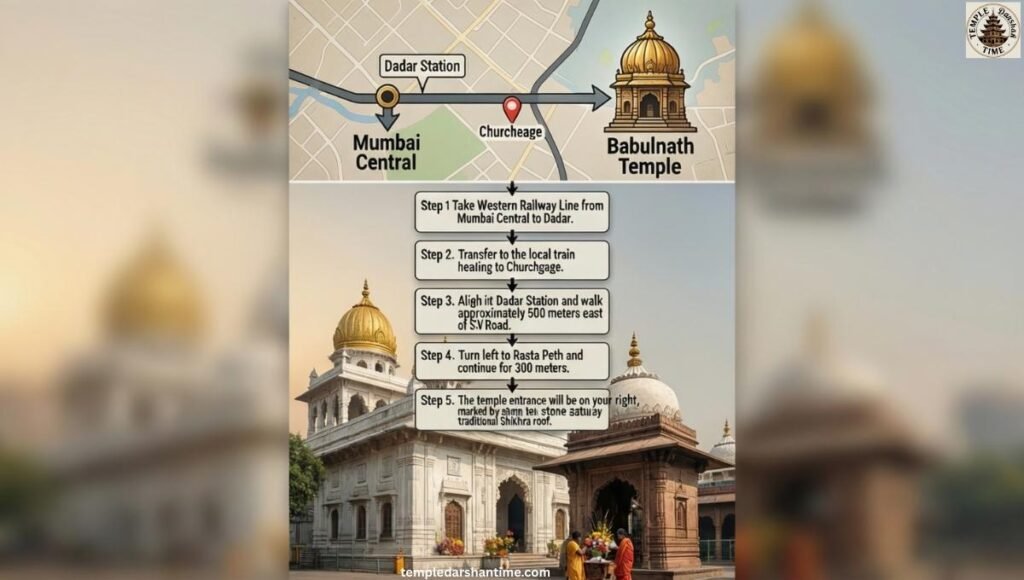
Babulnath Temple location on Malabar Hill makes it accessible from all parts of Mumbai. Multiple transport options ensure convenient travel for devotees.
The temple sits near Girgaum Chowpatty, one of Mumbai’s most famous beaches. Its central position in South Mumbai connects it well to major railway stations and bus routes. You can reach the temple by train, bus, taxi, or even on foot from nearby areas.
Nearest Station to Babulnath Temple
Charni Road station to Babulnath Temple is the most convenient railway route. This Western Line station lies approximately 1 kilometer from the temple.
Babulnath temple nearest station options include:
- Charni Road Station: 1 km (15-20 minutes walk)
- Marine Lines Station: 2.5 km
- Churchgate Station: 3 km
- Grant Road Station: 2 km
From Charni Road, exit towards the Girgaum side and follow signs to Babulnath Hill. The uphill walk offers scenic views of the sea and surrounding neighborhoods. Local residents can guide you if you’re unsure about the exact path.
Nearest railway station to Babulnath Temple on the Central Line would be CST (Chhatrapati Shivaji Terminus). However, switching to the Western Line at Dadar or taking a taxi proves more convenient. Auto-rickshaws and app-based cabs are readily available at all major stations.
The walk from Charni Road involves climbing stairs and slopes but remains manageable for most visitors. Elderly devotees can use the temple’s lift facility once they reach the base. Early morning or late evening walks provide pleasant weather conditions.
Travel Options from Charni Road:
- Walking: 15-20 minutes uphill
- Auto-rickshaw: 5-7 minutes
- Taxi/Cab: 5 minutes
- Bus: BEST buses to Girgaum Chowpatty, then short walk
By Bus: BEST buses numbered 103, 105, 106, 122, 123, and 132 connect to Girgaum Chowpatty. From the bus stop, the temple is a 10-minute walk uphill. Buses operate frequently throughout the day from major areas like Bandra, Dadar, and Colaba.
By Taxi or App Cab: Uber, Ola, and local taxis provide door-to-door service. Simply enter “Babulnath Temple, Malabar Hill” as your destination. This option works best during festivals when walking might be tiring due to crowds.
By Personal Vehicle: Limited parking exists near the temple entrance. During peak hours and festivals, finding parking becomes challenging. Consider using public transport or arriving very early if driving your own vehicle.
Babulnath Temple Surroundings and Facilities
The temple premises offer excellent facilities ensuring comfortable visits for all devotees. Modern amenities blend seamlessly with the traditional spiritual environment.
Babulnath Temple lift facility helps elderly and differently-abled devotees reach the main shrine effortlessly. The surrounding gardens provide peaceful spots for meditation and rest. Clean washrooms, drinking water, and seating areas enhance visitor comfort.
Key Facilities Available:
- Lift Service: ₹1 nominal charge for reaching main temple
- Footwear Counter: Safe storage for shoes and sandals
- Drinking Water: Free water facilities throughout premises
- Seating Areas: Shaded spots for rest and meditation
- Washrooms: Clean and well-maintained facilities
- Prasad Counter: Distribution of blessed offerings
- Gardens: Beautifully maintained green spaces
Elderly access temple Mumbai features make Babulnath Temple inclusive for all age groups. The lift operates during temple hours and can accommodate wheelchairs. Volunteers assist senior citizens and differently-abled visitors when needed.
The temple surroundings feature beautiful landscaping with flowering plants and traditional designs. Meditation places in Mumbai like the quiet corners here offer perfect spots for contemplation. Benches under shady trees provide rest after climbing the stairs.
Security personnel ensure safe and organized movement of devotees during all hours. CCTV cameras monitor the premises for added safety. First-aid facilities are available for medical emergencies.
Also Read About: Sri Bhadrakali Temple Warangal Darshan Timings: Pooja Online Booking & Price
Babulnath Temple Entry Fee
One of the best aspects of Babulnath Temple is its free entry temples in Mumbai policy. The temple welcomes all devotees without charging any entrance fee.
Entry Details:
- General Entry: Completely FREE
- Lift Service: ₹1 only
- Photography: Not allowed inside main shrine
- Prasad: Available at nominal donation
The Babulnath temple entry fee structure shows the temple’s commitment to accessibility for all economic classes. Everyone can worship Lord Shiva regardless of their financial status. This democratic approach reflects the true spirit of Hindu temple traditions.
Special darshan and pooja services carry charges as mentioned earlier. However, standard darshan remains free throughout the year, including festivals. The minimal ₹1 lift charge helps maintain the facility and remains affordable for everyone.
Best Time to Visit Babulnath Temple
Planning your visit during optimal times enhances your spiritual experience significantly. Weather, festivals, and crowd patterns all influence the ideal visiting period.
Best Months: November to March offer pleasant weather with lower humidity. The temperature remains comfortable for climbing stairs and spending time at the temple. Mumbai’s winter season provides the most enjoyable visiting conditions.
Best Time During the Day:
- Early Morning (5:30-7:30 AM): Peaceful atmosphere, fewer crowds
- Late Evening (8:00-10:00 PM): Beautiful aarti, cooler weather
- Avoid: Noon hours (12:00-3:00 PM) due to heat and moderate crowds
Festival Times: Mahashivratri in February-March and Shravan Mondays in July-August attract maximum devotees. These periods offer intense spiritual energy but expect heavy crowds. Booking VIP darshan in advance helps during these peak times.
Weekday mornings see fewer visitors compared to weekends. Monday mornings attract regular Shiva devotees but remain manageable. Sunday afternoons experience the highest family visitor counts.
History of Babulnath Temple Mumbai
Babulnath Temple history dates back several centuries, making it one of Mumbai’s oldest Shiva shrines. The temple’s origins blend divine legend with historical architectural development.
According to ancient stories, a cow would mysteriously pour milk at a specific spot daily. Curious villagers investigated and discovered a self-manifested Shivling beneath the ground. This miraculous finding led to the construction of a temple to honor Lord Shiva’s divine presence.
The original structure was modest, but devotees expanded it over centuries. The current architecture showcases traditional Hindu temple design with intricate carvings and a towering shikhara. Stone sculptures depicting various deities and mythological scenes adorn the temple walls.
Ancient temples in Mumbai like Babulnath preserve centuries-old traditions and rituals. The temple has witnessed Mumbai’s transformation from a fishing village to a bustling metropolis. Despite modernization all around, the temple maintains its spiritual purity and traditional worship methods.
The Babulnath Temple Shivling remains the central focus of devotion. Devotees believe this naturally manifested linga possesses immense spiritual power. Daily abhishek with milk, water, and bel leaves keeps the ancient tradition alive.
Visiting Tips and Best Time to Visit Babulnath Temple
Temple darshan tips help you make the most of your spiritual journey. Following these guidelines ensures a smooth and fulfilling experience.
Dress Code:
- Wear modest, traditional clothing
- Avoid shorts, sleeveless tops, or revealing outfits
- Remove footwear before entering inner sanctum
- Cover your head if you prefer traditional customs
What to Bring:
- Flowers (especially bel leaves for Shiva)
- Fruits for offering
- Incense sticks
- Small amount of milk for abhishek
- Water bottle for personal use
Temple Etiquette:
- Maintain silence in inner shrine areas
- Don’t touch the Shivling directly
- Follow queue discipline during darshan
- Photography prohibited inside main temple
- Switch phones to silent mode
Best Practices:
- Arrive 15 minutes before aarti times
- Use lift facility if you have difficulty climbing
- Collect prasad after completing darshan
- Visit on empty stomach for morning darshan (traditional practice)
- Carry minimal belongings for security reasons
Timing Babulnath temple visits during non-peak hours gives you more personal space for prayers. Weekday mornings and late evenings offer the most peaceful atmosphere. Festival times provide intense spiritual energy but require patience with crowds.
Nearby Attractions Around Babulnath Temple

Babulnath Temple Malabar Hill location places it near several iconic Mumbai landmarks. Combining your temple visit with sightseeing makes for a fulfilling day trip.
Places to Visit Near Babulnath Temple:
Girgaum Chowpatty (1 km): This famous beach offers stunning sunset views and local street food. After darshan, relax by the sea and enjoy Mumbai’s coastal beauty. The beach connects directly to the temple via a pleasant downhill walk.
Marine Drive (2 km): Known as the “Queen’s Necklace,” this iconic promenade offers breathtaking sea views. Evening walks along Marine Drive after temple visit create memorable experiences. The area features several restaurants and cafes for refreshments.
Hanging Gardens (1.5 km): These terraced gardens on Malabar Hill provide peaceful green spaces with city views. Perfect for families with children who want to relax after temple visit. The well-maintained gardens showcase beautiful topiary work.
Kamala Nehru Park (1.5 km): Located adjacent to Hanging Gardens, this park offers panoramic views of Marine Drive. The famous “Old Woman’s Shoe” structure delights children. Early morning or sunset visits offer the best views.
Walkeshwar Temple (2 km): Another ancient Shiva temple in the area, showcasing traditional architecture. The Banganga Tank nearby is a sacred water body with historical significance. Combining both temple visits makes a complete spiritual tour.
Mani Bhavan Gandhi Museum (3 km): Mahatma Gandhi’s Mumbai residence, now a museum showcasing India’s freedom struggle. History enthusiasts find this museum deeply moving and educational. The preserved rooms and photo galleries offer glimpses into Gandhi’s life.
Taraporewala Aquarium (2.5 km): One of India’s oldest aquariums, featuring diverse marine life. Children especially enjoy this attraction after temple visit. The aquarium displays both freshwater and saltwater species.
Babulnath Temple Tickets
Many visitors wonder about Babulnath temple tickets requirements. The temple follows a simple, accessible system for all devotees.
General Darshan: No tickets required – completely free entry for everyone. Simply enter the temple premises and proceed for darshan following the queue system.
Paid Services Available:
- VIP Darshan Pass: ₹200 (purchase at temple counter)
- Special Pooja Booking: ₹1,000 (book in advance during festivals)
- Jal Abhishek: ₹2,000 (available daily)
- Group Darshan: ₹100 per person (minimum 10 people)
During Mahashivratri and Shravan month, advance booking for special services becomes necessary. Visit the temple office or contact them by phone for reservations. Regular darshan remains free even during peak festival times.
No online ticketing system currently exists for general darshan. All payments for special services are made at the temple administrative office. Keep exact change for smoother transactions, especially for the ₹1 lift service.
Babulnath Temple Malabar Hill
Babulnath Temple Malabar Hill location makes it one of South Mumbai’s prime spiritual destinations. Malabar Hill is known for its scenic beauty and historical significance.
The temple sits atop the hill, providing panoramic views of the Arabian Sea. The elevated position creates a sense of being closer to the divine. Cool sea breezes enhance the meditative atmosphere throughout the day.
Hindu temples in South Mumbai benefit from Malabar Hill’s peaceful, upscale neighborhood character. Unlike crowded commercial areas, this location offers tranquility amid urban chaos. The surrounding residential areas maintain a calm environment conducive to worship.
The hill’s height, approximately 150 feet above sea level, gives the temple its commanding presence. Ancient legends say this elevation brings devotees closer to Lord Shiva’s cosmic energy. The climb itself becomes a form of penance and devotion.
Babulnath Temple Nearest Station
Babulnath temple nearest station information is crucial for planning your journey efficiently. Railway connectivity makes the temple accessible from across Mumbai.
Primary Station – Charni Road (Western Line):
- Distance: 1 km
- Walking Time: 15-20 minutes
- Auto/Taxi Time: 5-7 minutes
- Platform Exit: Use Girgaum exit
Alternative Stations:
- Marine Lines: 2.5 km (Western Line)
- Churchgate: 3 km (Western Line)
- Grant Road: 2 km (Western Line)
- Mumbai Central: 4 km (Western Line)
For visitors from suburbs or other cities, Charni Road remains the most convenient option. The station handles good train frequency throughout the day. Peak hours see higher crowds, so plan accordingly if traveling during rush times.
From Dadar (where Central and Western Lines meet), take a Churchgate-bound local train. Charni Road comes after Grant Road station when traveling southward. The journey from Dadar takes approximately 15-20 minutes.
Babulnath Temple Photos
Babulnath temple photos capture the architectural beauty and spiritual atmosphere of this sacred shrine. However, photography rules ensure respect for religious sentiments.
Photography Guidelines:
- Exterior Photography: Allowed freely
- Temple Architecture: Can be photographed from outside
- Main Shrine/Shivling: Strictly prohibited
- Inside Sanctum: No photography or videography
- Devotees: Ask permission before photographing people
The temple’s exterior showcases beautiful traditional architecture worth capturing. The towering shikhara, intricate carvings, and decorative elements make excellent photo subjects. The surrounding gardens and hill views also provide scenic photography opportunities.
Best Photo Spots:
- Temple entrance and main gate
- Exterior architectural details
- Gardens and surrounding landscape
- View of the sea from temple premises
- Evening when temple lights illuminate
Religious places in Mumbai generally maintain strict photography rules inside sacred spaces. Respecting these guidelines shows cultural sensitivity and devotion. Focus on capturing memories in your heart rather than just on camera.
Babulnath Temple Timings
Understanding Babulnath temple timings helps you plan your visit without last-minute confusion. The temple maintains consistent schedules throughout the year.
Regular Daily Timings: 5:30 AM – 10:00 PM (Monday to Sunday)
Extended Hours:
- Shravan Month: 5:30 AM – 10:30 PM
- Mahashivratri: 4:00 AM (one day) – 6:00 AM (next day)
Aarti Schedule:
- 4:45 AM (Mangala Aarti)
- 6:30 AM (Morning Aarti)
- 12:00 PM (Noon Aarti)
- 6:30 PM (Evening Aarti)
- 8:30 PM (Shringar Aarti)
- 9:45 PM (Shej Aarti)
Daily darshan timings Mumbai at Babulnath Temple remain among the most devotee-friendly in the city. The long operating hours accommodate different work schedules and personal preferences. Early birds can attend morning rituals while night visitors enjoy evening ceremonies.
Babulnath Temple Opening Time
Babulnath temple opening time begins early to serve devotees who prefer morning worship. The temple doors open before sunrise for Mangala Aarti.
Standard Opening: 5:30 AM daily
Special Early Opening:
- Mahashivratri: 4:00 AM
- Shravan Mondays: 5:00 AM (slight early opening)
The early babulnath temple opening time allows devotees to complete darshan before starting their workday. Morning hours provide the calmest, most meditative atmosphere. The cool morning air and peaceful surroundings enhance spiritual focus.
Priests arrive even earlier to prepare the shrine for daily worship. The Shivling is bathed, decorated, and prepared before devotees enter. This traditional preparation ritual maintains the temple’s spiritual purity.
Babulnath Temple History
Babulnath temple history weaves together legend, devotion, and architectural evolution. This sacred site has served Mumbai’s spiritual community for centuries.
The temple’s foundation story involves a divine miracle that revealed the Shivling’s location. Local cowherd communities noticed a cow mysteriously emptying her milk at the same spot daily. Investigation uncovered the self-manifested Shivling, inspiring temple construction.
Over centuries, devotees expanded and beautified the original structure. The current temple showcases traditional Hindu architecture with modern maintenance standards. Stone carvings tell stories from Hindu mythology and Shaivite traditions.
Famous Shiva temples in Mumbai like Babulnath preserve ancient worship practices unchanged for generations. The continuous tradition of daily rituals connects modern devotees to centuries of spiritual heritage. Temple priests pass down ritual knowledge through family lineages.
The temple survived British colonial rule, maintaining Hindu religious practices despite external changes. It witnessed Mumbai’s growth from seven islands to a unified megacity. Throughout these transformations, Temple remained a constant spiritual anchor for devotees.
Also Read About: Maa Kamakhya Temple Timings 2026: Darshan, Pooja & Festival Guide
Babulnath Temple Aarti Timings
Babulnath temple aarti timings follow a sacred schedule designed to honor Lord Shiva throughout the day. Each aarti serves unique spiritual purposes.
Complete Aarti Schedule:
| Aarti | Time | Duration |
| Mangala Aarti | 4:45 AM | 15 minutes |
| Morning Aarti | 6:30 AM | 30 minutes |
| Noon Aarti | 12:00 PM | 30 minutes |
| Evening Aarti | 6:30 PM | 30 minutes |
| Shringar Aarti | 8:30 PM | 30 minutes |
| Shej Aarti | 9:45 PM | 15 minutes |
Aarti schedule Mumbai temples at Babulnath follows Vedic time calculations and astrological significance. Each ceremony aligns with cosmic energies believed most conducive for specific prayers. Traditional instruments like bells, conch shells, and drums create sacred soundscapes.
Devotees participate by singing bhajans, clapping, and performing circumambulation. The collective energy during aarti creates powerful spiritual vibrations. First-time visitors often feel deeply moved by the devotional atmosphere and synchronized rituals.
Frequently Asked Questions
Which station is nearby Babulnath Temple?
Charni Road is the nearest railway station to this temple, making travel easy for devotees.
Which is the most powerful Shiv temple?
Many devotees consider this temple very powerful due to its ancient Shivling and strong spiritual energy.
Is Babulnath Temple a jyotirlinga?
Babulnath Temple is not a jyotirlinga, but it is a highly revered Shiva temple.
How many stairs are in Babulnath?
There are around 110 stairs to reach Babulnath Temple, unless you use the lift facility.
Why is Shiva called Babulnath?
Shiva is called Babulnath because the Shivling was discovered under a babul tree.
How much time does it take to climb Parasnath?
Climbing Parasnath usually takes four to five hours, depending on pace and weather conditions.
Conclusion
Babulnath Temple is a peaceful place that touches the heart the moment you arrive. Many visitors first search for Babulnath Temple tickets, then learn entry is free for everyone. Located at this temple malabar hill, it offers calm views and spiritual energy. Knowing the Babulnath Temple nearest station helps plan travel easily. People often check Babulnath Temple photos online, but the real beauty feels deeper in person. Understanding this temple history makes the visit more meaningful and emotional.
Before visiting Babulnath Temple, it helps to know the Babulnath temple Timings and Babulnath Temple opening time. Planning around this temple Aarti timings lets you enjoy prayers peacefully. This guide helps you feel prepared and relaxed. Babulnath Temple suits devotees, families, and tourists alike. A visit to Babulnath Temple brings faith, calm, and clarity. Many people leave this temple feeling lighter and spiritually refreshed.

Michael Anderson is a spiritual content writer with 8+ years of experience documenting temple darshan timings across India. He has completed 100+ projects with 95% client satisfaction, helping thousands of devotees plan meaningful spiritual journeys.