
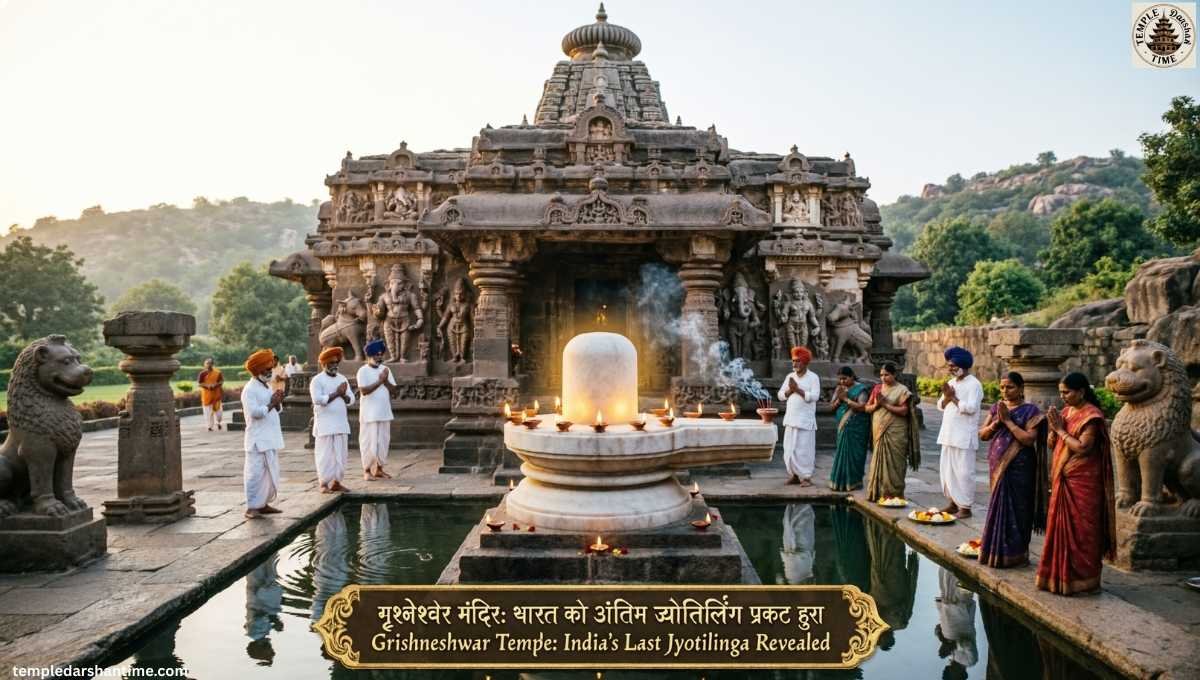
Nestled just one kilometre from the UNESCO-listed Ellora Caves in Maharashtra, Grishneshwar Temple is one of India’s most sacred pilgrimage destinations. Recognized as the 12th Jyotirlinga in the ancient Shiva Purana, the Grishneshwar Jyotirlinga Temple draws hundreds of thousands of devoted Shiva worshippers every year. Grishneshwar Temple timings run from 5:30 AM to 9:30 PM daily, with extended hours during Shravan month and Maha Shivratri.
Grishneshwar Temple tickets are available for free general darshan, with paid Special and VIP darshan options offering priority access. The Grishneshwar Temple official website provides updated booking details, ritual schedules, and e-ticket services for a seamless, spiritually enriching visit in 2026.
Grishneshwar Temple Quick Information (2026)
Before planning your pilgrimage to the Grishneshwar Jyotirlinga, it helps to have all the essential details in one place. The table below offers a quick-reference summary for devotees traveling from across India and abroad.
| Details | Information |
| Temple Name | Grishneshwar Jyotirlinga Temple |
| Deity | Lord Shiva |
| Location | Verul, Sambhajinagar (Aurangabad), Maharashtra |
| Darshan Timings | 5:30 AM – 3:00 PM & 7:30 PM – 9:30 PM |
| Entry Fee | Free for General Darshan |
| Best Months | July–August (Shravan), Feb–March (Maha Shivratri) |
| Ideal Visit Duration | 1–2 Hours |
| Nearest Attraction | Ellora Caves (1 km) |
| Dress Code | Traditional Indian Attire |
This Verul temple, also historically known as a landmark of the Aurangabad temple visit circuit, is located just one kilometre from the famous Ellora Caves. Whether you are arriving from Aurangabad, Pune, or Mumbai, this information helps you plan every step of your journey efficiently and without last-minute confusion.
Grishneshwar Temple Darshan Timings 2026
Understanding the Grishneshwar darshan timings is the most important step before visiting. The temple follows a well-structured schedule to manage the flow of thousands of pilgrims daily while ensuring the sanctity of rituals is never compromised.
Darshan Schedule (Daily Timings)
The Sambhajinagar temple opens early in the morning and stays open until late evening, giving devotees flexible options throughout the day.
| Darshan Session | Opening Time | Closing Time |
| Morning Darshan | 5:30 AM | 3:00 PM |
| Evening Darshan | 7:30 PM | 9:30 PM |
The morning session is the busiest, especially on weekends and during festive periods. Arriving by 5:30 AM gives you the best chance of a calm, queue-free darshan experience inside the Garbhagriha. The evening session, starting at 7:30 PM, coincides beautifully with the Sandhya Aarti, making it a spiritually enriching time for devotees who wish to experience the temple’s divine energy after sunset.
Peak Season Darshan Timings
During specific festivals and auspicious months, the Grishneshwar Jyotirlinga adjusts its timings to accommodate the surge in pilgrims. Here is what devotees should know:
- Shravan Month (July–August): Temple may open as early as 3:00 AM to manage the extraordinarily large crowds that gather during this sacred month.
- Maha Shivratri: Extended darshan hours are offered, with the temple often remaining open through the night to allow continuous worship.
- Public Holidays and Weekends: Slight variations in timings may occur, so checking the Grishneshwar Temple official website before visiting is always recommended.
Planning your visit around these timings ensures that you neither miss an important aarti nor find yourself stuck in hours-long queues.
Grishneshwar Temple Pooja & Aarti Timings
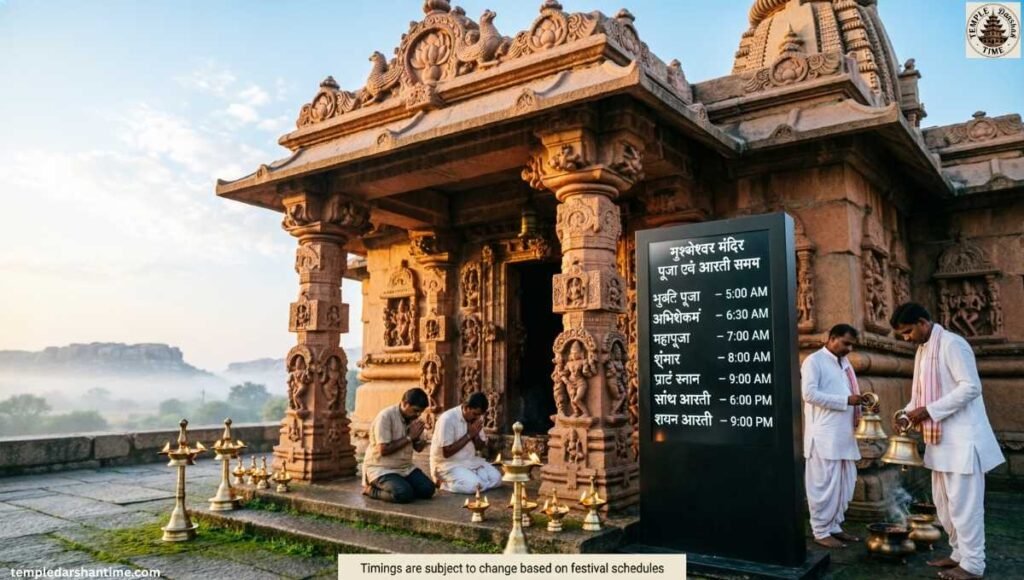
The daily ritual schedule at the Grishneshwar Jyotirlinga is a sacred and deeply structured program that has been followed for centuries. Each pooja and aarti is performed with Vedic mantras, conch blowing, bell ringing, and the lighting of ceremonial lamps, creating an atmosphere of intense devotion and spiritual energy.
Daily Pooja & Aarti Schedule
The following table outlines the complete daily ritual schedule that devotees can follow to align their visit with the most important ceremonies.
| Ritual / Aarti | Timings | Frequency |
| Mangal Aarti | 4:00 AM | Daily |
| Morning Jalhari Pooja | 8:00 AM | Daily |
| Maha Prasad | 12:00 PM | Daily |
| Evening Jalhari Pooja | 4:00 PM | Daily |
| Sandhya Aarti | 7:30 PM | Daily |
| Shej Aarti | 10:00 PM | Daily |
The Mangal Aarti at 4:00 AM is one of the most spiritually powerful rituals of the day, performed at the break of dawn when the divine energy of the Shiva Linga is believed to be at its peak. The Jalhari Pooja, conducted twice daily, involves the ceremonial worship of the base surrounding the Shiva Linga. The Maha Prasad at noon marks the midday offering, while the Shej Aarti at 10:00 PM is the final ritual of the day, symbolically putting the deity to rest.
Best Aarti to Attend
For first-time visitors and seasoned pilgrims alike, the Sandhya Aarti at 7:30 PM is considered the crown jewel of the daily worship schedule. As the lamps are lit, bells echo through the stone corridors, and devotees chant in unison, the Ellora Caves temple area transforms into a sea of devotion. If your schedule allows only one ritual, make it the Sandhya Aarti , it is an experience that stays with you long after you leave the temple.
Abhishekam at Grishneshwar Jyotirlinga
Performing the Abhishekam Grishneshwar ritual is considered one of the most meritorious acts a Shiva devotee can undertake. This sacred ceremony involves bathing the Shiva Linga with milk, curd, honey, ghee, and holy water, while Vedic mantras are chanted by trained priests. The act of Shiva Linga Abhishekam is deeply rooted in Hindu tradition and is believed to cleanse negative karma, invite prosperity, and strengthen the devotee’s spiritual connection with Lord Shiva.
Abhishekam Timings 2026
| Abhishekam Session | Timings | Days |
| Morning Session | 6:00 AM – 11:00 AM | Daily |
| Afternoon Session | 1:00 PM – 7:00 PM | Daily |
Both the Rudrabhishek booking and Jal Abhishek ceremonies are available during these windows. Devotees are advised to arrive at least 30 minutes before their chosen slot to complete the registration process smoothly.
Abhishekam Charges
The Abhishekam at Grishneshwar Jyotirlinga is priced at approximately ₹551 per person, which includes all essential ritual materials such as bilva leaves offering, sacred water, milk, and other traditional items. This fee is subject to change as per temple guidelines, so confirming the latest rate at the temple counter is advisable.
Booking Availability
Currently, Abhishekam booking is available offline only at the temple counter. However, the temple is expected to launch an online booking portal for Abhishekam and Rudrabhishek booking soon, aligned with the broader digitization of pilgrimage Maharashtra 2026 services.
Important Tip for Devotees
During Shravan month darshan and Maha Shivratri Grishneshwar celebrations, Abhishekam slots fill up within hours of opening. Arriving the previous evening or at the very start of darshan on your chosen day is strongly recommended to secure your preferred time slot.
Grishneshwar Temple Entry Fee & Ticket Options
One of the most appreciated aspects of visiting this ancient shrine is that the Grishneshwar entry fee for general darshan is completely free. However, for those seeking a more comfortable and time-efficient experience, paid ticket options are available.
Ticket Options (2026)
| Ticket Type | Price | Features |
| General Darshan | Free | Regular Queue |
| Special Darshan | ₹200 – ₹500 | Faster Entry |
| VIP Darshan / Abhishekam | ₹500 – ₹700 | Priority Access + Abhishekam |
The Grishneshwar ticket price varies based on the type of experience you seek, and each option serves a different kind of devotee.
General Darshan
General darshan is ideal for those who prefer the traditional pilgrimage experience without any additional cost. However, it is important to note that queues during peak periods can extend to two to three hours, especially during Shravan month and Maha Shivratri.
Special Darshan
The special darshan ticket is best suited for families, senior citizens, and devotees with limited mobility or time. It offers a significantly shorter waiting experience and smoother access to the inner sanctum. Grishneshwar Temple special darshan tickets can be booked at the counter or, where available, through the official portal.
VIP Darshan / Abhishekam Ticket
VIP darshan Grishneshwar tickets provide priority entry directly into the Garbhagriha darshan area and include participation in the Abhishekam ceremony. This is the most sought-after option for devotees who want an intimate, unhurried experience with the Shiva Linga. For this option, it is recommended to check Grishneshwar temple official website VIP darshan availability in advance.
Online Booking for Grishneshwar Temple (2026 Guide)
The introduction of temple darshan slot booking online has made pilgrimage planning significantly easier for devotees traveling from distant cities. The Grishneshwar online booking system for special darshan is currently active, with further services being added progressively.
How to Book Grishneshwar Temple Darshan Tickets Online
Follow these steps carefully to complete your e-ticket darshan booking without errors:
- Visit the official Grishneshwar Temple official website or an authorized pilgrimage booking platform.
- Navigate to the Special Darshan or VIP Darshan booking section.
- Select your preferred visit date and available time slot.
- Enter devotee details including full name, age, mobile number, and ID proof number.
- Choose your darshan category , Special Darshan or VIP Darshan.
- Complete the secure online payment process.
- Download and save your e-ticket darshan confirmation.
- Carry a valid government-issued ID that matches your booking details on the day of your visit.
Important Tips for Online Darshan Booking
Keep these practical points in mind to avoid complications on your visit day:
- Book at least one to two weeks in advance during Shravan month and Maha Shivratri, as slots are exhausted within hours.
- Arrive 30 to 45 minutes before your allotted slot for security checks and queue entry.
- Double-check that the name on your ID matches the e-ticket exactly to prevent entry denial.
- For the latest updates, regularly visit Grishneshwar temple at dailydarshantime.com or the official temple portal.
How to Reach Grishneshwar Temple (Travel Guide 2026)

The Grishneshwar Jyotirlinga is well-connected by all major modes of transport, making it accessible for pilgrims from every corner of India.
By Air
The nearest airport is Aurangabad Airport, located approximately 30 kilometres from the temple. Upon arrival, taxis and app-based cab services are readily available outside the terminal. The drive to the Verul temple takes roughly 45 to 50 minutes under normal traffic conditions.
By Train
The nearest railway station Grishneshwar pilgrims use is Aurangabad Railway Station, situated about 29 kilometres away. From the station, auto-rickshaws, state government buses, private taxis, and shared cabs regularly ply toward Ellora and Verul, making the last leg of the journey convenient and affordable.
By Road
Road travel remains the most flexible option for pilgrims, particularly those coming from Pune or Mumbai. Frequent state buses connect Aurangabad to Verul, and private taxis and rental vehicles are widely available for a direct, door-to-door experience.
Temple Address
Grishneshwar Jyotirlinga Mandir, Verul, Sambhajinagar (Aurangabad), Maharashtra – 431102
Bonus Tip for Visitors
Since the famous Ellora Caves are located just 1 kilometre from the temple, combining both visits in a single day is an excellent idea. Most travel itineraries in the Aurangabad temple visit circuit include both destinations together, saving time and transport costs.
Grishneshwar Temple Distance
Understanding the Grishneshwar Temple distance from major cities helps pilgrims plan their journey effectively. Here is a quick reference:
| City | Distance | Approximate Travel Time |
| Aurangabad | 29–30 km | 45–50 minutes |
| Pune | 230 km | 4–5 hours |
| Mumbai | 335 km | 6–7 hours |
| Nashik | 170 km | 3–4 hours |
Mumbai to Grishneshwar Temple
The Mumbai to Grishneshwar Temple journey is one of the most popular pilgrimage routes in Maharashtra. The approximate distance is 335 kilometres, and devotees typically choose between the following travel options:
- By Road: The Mumbai-Pune Expressway followed by the Pune-Aurangabad Highway is the most comfortable road route. The total journey takes approximately six to seven hours by private vehicle or intercity bus.
- By Train: Several trains run between Mumbai’s Chhatrapati Shivaji Maharaj Terminus and Aurangabad, from where local transport completes the journey to Verul.
- By Air: A short flight from Mumbai to Aurangabad Airport takes under an hour, making it the fastest option for those on a tight schedule.
Best Time to Visit Grishneshwar Temple (2026 Guide)
Shravan Month (July–August)
Shravan month darshan at the Grishneshwar Jyotirlinga is considered the most auspicious period in the Hindu calendar. The temple sees its highest footfall during these weeks, with devotees arriving from across pilgrimage Maharashtra 2026 destinations. Extended temple hours, special decorations, and continuous rituals make this season spiritually unmatched , though pilgrims must prepare for large crowds and long queues.
Maha Shivratri
Maha Shivratri Grishneshwar celebrations are legendary among Shiva devotees. Night-long aartis, special Abhishekam ceremonies, and a festival atmosphere transform the Ellora Caves temple vicinity into a hub of spiritual energy. If you want to witness the temple at its most vibrant, Maha Shivratri is the time to visit.
Weekdays & Early Mornings
For those who prefer solitude and uninterrupted darshan, visiting on weekdays between Tuesday and Thursday and arriving before 6:30 AM is the ideal strategy. Shorter queues, cooler temperatures, and a calmer atmosphere make early morning visits the most peaceful way to experience the Garbhagriha darshan.
Dress Code at Grishneshwar Temple
The Grishneshwar Temple dress code is strictly enforced to maintain the sanctity and traditional values of this ancient shrine. Deviating from the dress code may result in denial of entry into the inner sanctum.
Dress Code for Men
- Dhoti or traditional lower garment is mandatory for Garbhagriha entry.
- Shirts, T-shirts, and upper garments must be removed before entering the inner sanctum, as per centuries-old temple tradition.
- Western casual wear is not permitted in restricted temple zones.
Dress Code for Women
- Saree or salwar kameez is the preferred attire.
- Any modest traditional Indian clothing that covers the body appropriately is accepted.
- Western outfits including jeans, shorts, or sleeveless tops are not permitted near the sanctum area.
Respecting the temple dress code Maharashtra standard is not just a rule , it is an expression of reverence for the divine space you are entering.
Temple History & Importance of Grishneshwar Jyotirlinga
The Grishneshwar Jyotirlinga holds a place of immense reverence in Hindu scripture. According to the Shiva Purana Jyotirlinga texts, this is the 12th and final Jyotirlinga , a self-manifested column of divine light representing Lord Shiva’s infinite energy. The temple’s mythological origin is associated with Kusuma, a devoted woman whose unwavering faith moved Lord Shiva to appear in the form of a Jyotirlinga at this very location. This story is retold in the Shiva Purana and continues to inspire millions of pilgrims who make the journey to this Verul temple seeking blessings, healing, and divine grace.
Architectural Beauty
The Ahilyabai Holkar temple , as it is reverentially known among historians , was rebuilt in the 18th century by Maratha queen Ahilyabai Holkar, who was also responsible for the restoration of other iconic shrines including Kashi Vishwanath in Varanasi and the Somnath Temple in Gujarat. Her legacy of temple restoration is one of the most celebrated chapters in Indian religious history.
The structure itself is a breathtaking example of ancient Indian craftsmanship. Built entirely from red basalt stone temple material, the walls are adorned with intricate carvings depicting mythological scenes, celestial figures, and divine legends. The sanctum’s design creates a powerful sense of presence and calm, drawing devotees into a state of meditative reverence the moment they step inside. The detailed sculptures lining the outer walls serve as a visual retelling of stories from Hindu tradition, making the temple as much a cultural treasure as a spiritual one.
Grishneshwar Temple Photos
Devotees and tourists frequently seek photographs of the Grishneshwar Jyotirlinga to preserve the memory of their pilgrimage. However, it is critical to note that photography is strictly prohibited inside the temple premises. Attempting to capture photos or videos inside the sanctum can lead to immediate removal from the darshan queue.
The temple’s no-photography rule applies to both mobile phones and cameras alike, and the temple locker facility available near the entrance allows devotees to safely deposit their devices before entering. Lockers and storage facilities are available at no major cost and ensure the security of your belongings throughout your darshan.
Grishneshwar Temple Official Website & Online Resources
For the most current and accurate information on darshan bookings, timings, and festival schedules, devotees are encouraged to refer to the Grishneshwar Temple official website and trusted pilgrimage platforms. Those looking for regularly updated darshan timing information can also refer to Grishneshwar Temple at dailydarshantime.com, which maintains up-to-date schedules and visitor guidelines for 2026. Always cross-reference information from official sources before planning your visit, especially during peak festival seasons when timings and procedures may change at short notice.
Also Read About: Govardhan Parikrama Distance & 21 km Govardhan Parikrama Route
Frequently Asked Questions
What is the Speciality of Grishneshwar Temple?
Grishneshwar Temple is the 12th and final Jyotirlinga, making it uniquely significant in Hindu tradition as Lord Shiva’s last divine self-manifestation described in the Shiva Purana.
Which City is Closest to Grishneshwar Jyotirlinga Temple?
Sambhajinagar (Aurangabad) is the closest major city to Grishneshwar Temple, located approximately 29–30 kilometres away, with regular buses and taxis available.
Which Jyotirlinga is Most Powerful?
All 12 Jyotirlinga are equally sacred. However, Grishneshwar Temple holds special reverence as the final Jyotirlinga, symbolizing the completion of Lord Shiva’s divine presence across India.
Are Ellora Caves and Grishneshwar Temple the Same?
No. Grishneshwar Temple is a separate sacred shrine located just 1 kilometre from Ellora Caves. Both are distinct landmarks but conveniently visited together in one trip.
Which is Better to Visit, Ajanta or Ellora?
Both are UNESCO World Heritage Sites. Ellora is preferred for spiritual travelers since Grishneshwar Temple is nearby, combining religious and historical sightseeing in one rewarding visit.
Is There a Dress Code for Visiting Grishneshwar Temple?
Yes. Grishneshwar Temple strictly requires traditional Indian attire. Men must remove upper garments inside the sanctum. Western clothing is not permitted near the Garbhagriha.
Conclusion
Grishneshwar Temple is a must-visit for every Shiva devotee. This sacred Grishneshwar Jyotirlinga Temple carries centuries of faith and divine energy. Check Grishneshwar Temple timings before visiting. Plan your darshan wisely. Book Grishneshwar Temple tickets in advance during Shravan and Maha Shivratri. Avoid last-minute rush.
Always visit the Grishneshwar Temple official website for updated schedules and booking details. Grishneshwar Temple welcomes every devotee with open doors. General darshan is completely free. VIP and Special darshan options are also available. Whether you visit once or return every year, Grishneshwar Temple never fails to fill your heart with peace and divine blessings.

Michael Anderson is a spiritual content writer with 8+ years of experience documenting temple darshan timings across India. He has completed 100+ projects with 95% client satisfaction, helping thousands of devotees plan meaningful spiritual journeys.