
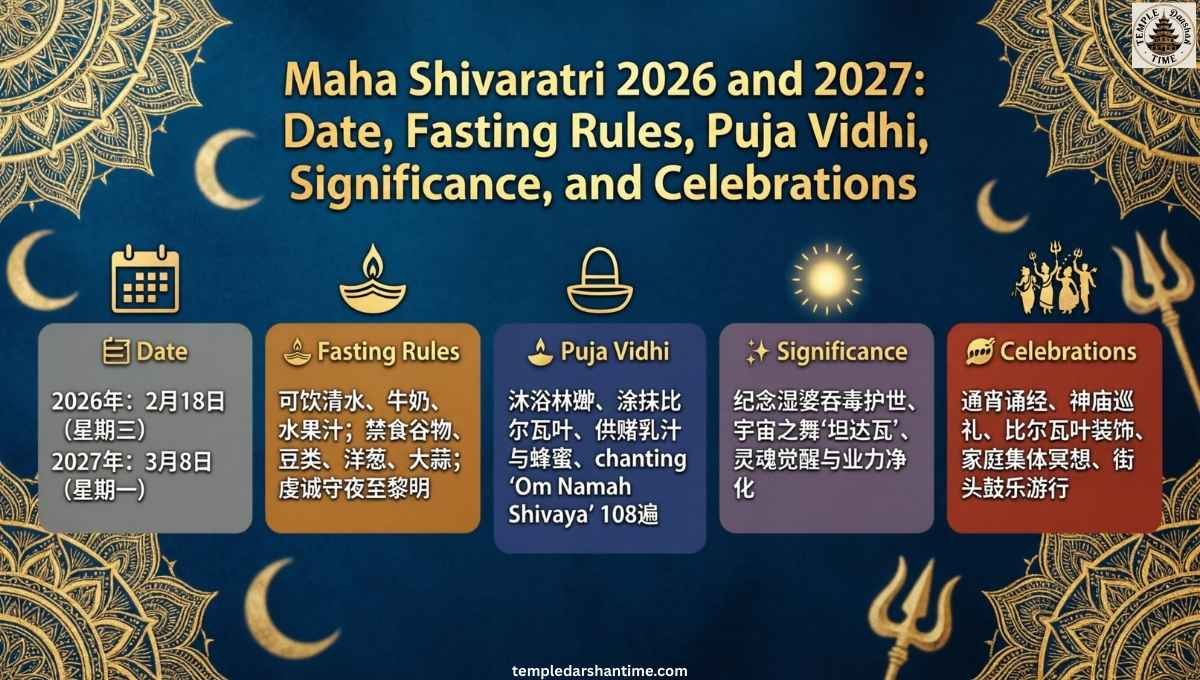
If you’ve been searching for the exact details of Maha Shivaratri, you’re probably feeling a little confused with so many different dates online. Many people are already looking for mahashivratri 2027, maha shivaratri 2027, 2027 shivaratri date, 2027 maha shivaratri date, and shivratri 2027 date but still aren’t sure which one is correct. It’s frustrating when you just want to plan your fast, puja, or temple visit without second-guessing the calendar.
In this blog, you’ll find clear and simple information about Maha Shivaratri, including confirmed dates, fasting rules, puja vidhi, and spiritual meaning. Everything is explained in easy words so you can prepare with peace of mind. By the end, you’ll have all the details you need in one place and feel fully ready for the celebration.
Maha Shivaratri Story
Maha Shivaratri is rooted in powerful spiritual stories from ancient Hindu scriptures. One popular belief says this night marks the divine marriage of Shiva and Parvati. Their union represents the perfect balance between consciousness and energy, masculine and feminine, stillness and power.
Another story connects this night to Lord Shiva’s Tandava dance. This cosmic dance symbolizes creation, preservation, and destruction. It reminds us that life is cyclical and constantly changing.
Some devotees also believe this is the night when Shiva saved the universe by drinking poison during the churning of the ocean. He held the poison in his throat, turning it blue. That’s why he’s also called Neelkanth. This story teaches selflessness and sacrifice for the greater good.
Maha Shivaratri 2026 and 2027 Date and Day
Maha Shivaratri follows the Hindu lunar calendar. It falls on Krishna Paksha Chaturdashi in the Phalguna month. Since it’s lunar-based, the date changes every year.
Here are the confirmed dates:
| Year | Date | Day |
| 2026 | 15 February | Sunday |
| 2027 | 6 March | Saturday |
In 2026, Maha Shivaratri will be observed on Sunday, 15 February 2026. The next year, mahashivratri 2027 falls on Saturday, 6 March 2027. These are the most auspicious nights for worshipping Lord Shiva.
The main puja is performed during Nishita Kaal, the midnight period. This time is considered the most powerful for connecting with divine energy. Devotees across India and the world stay awake to honor this sacred time.
Maha Shivaratri Festival
The Maha Shivaratri festival is celebrated with deep devotion and discipline. Devotees visit Shiva temples, perform Abhishekam, and chant mantras. Temples are decorated with flowers, lights, and sacred symbols.
This isn’t a festival of loud celebrations or feasts. It’s a night of silence, meditation, and introspection. People focus on purifying their minds and bodies. Fasting plays a major role in this purification process.
Many devotees stay awake all night, singing bhajans and reading Shiva Purana. Temples organize jaagran programs where spiritual discourses and devotional songs continue until dawn. The atmosphere is filled with peace, devotion, and spiritual energy.
Maha Shivaratri Date
The Maha Shivaratri date varies each year because it’s based on the lunar calendar. It always falls in late February or early March. For 2027, the 2027 Maha Shivaratri date is confirmed as 6 March.
You can also call it shivratri 2027 date or 2027 shivaratri date. These all refer to the same festival. If you’re planning to observe the fast or visit a temple, mark these dates in advance.
The festival timing depends on the moon’s position. That’s why checking the Hindu panchang or calendar is important. The Maha Shivaratri date is announced months in advance by religious authorities and astrologers.
Meaning and Spiritual Significance of Maha Shivaratri
The name Maha Shivaratri means “The Great Night of Shiva.” It holds deep spiritual meaning. This night is believed to be when cosmic energies are at their peak. Meditating or praying during this time can lead to faster spiritual growth.
Lord Shiva represents pure consciousness. He is the destroyer of ignorance and ego. Worshipping him on this night helps remove negativity from the mind. It opens the door to self-realization and inner peace.
This festival also celebrates the union of Shiva and Parvati. It teaches the balance between opposites, strength and compassion, detachment and love, silence and power. These qualities are essential for a meaningful life.
From a yogic perspective, this night is ideal for spiritual awakening. The body and mind are naturally aligned for meditation. Many yogis and spiritual seekers use this time to deepen their practice and gain insights.
Why Fasting Is Observed on Maha Shivaratri
Fasting on Maha Shivaratri is a spiritual discipline, not just a ritual. It helps calm the mind and reduce distractions. When you limit food intake, your body uses less energy for digestion. That energy can be redirected toward prayer and meditation.
Shivaratri fasting rules are flexible. There’s no one-size-fits-all approach. Some people observe a strict fast with no food or water. Others consume fruits, milk, or light meals. The choice depends on your health, age, and personal devotion.
The purpose of fasting is inner purification. It’s not about suffering or proving devotion through hardship. Even a simple fast done with sincerity is highly valued. What matters most is the intention and focus behind it.
Fasting also teaches self-control and discipline. It reminds you that you’re more than just physical needs. You’re a spiritual being capable of rising above cravings and impulses. This mental strength benefits you long after the festival ends.
Common Types of Maha Shivaratri Fast

There are several ways to observe the Shivaratri vrat. Choose the one that suits your body and lifestyle. Here’s a breakdown:
| Fasting Type | What It Means |
| Nirjala Fast | No food or water for 24 hours |
| Phalahar Fast | Only fruits, milk, and water |
| Milk Fast | Only milk and water throughout the day |
| Single-Meal Fast | One light satvik meal after evening puja |
Nirjala fast is the strictest. It’s for those in good health and strong devotion. Phalahar fast is more common and easier to follow. You can eat fruits like bananas, apples, and dates. Milk, curd, and nuts are also allowed.
The milk fast is simple and nourishing. Many people prefer this if they have health issues or physical weakness. A single-meal fast is ideal for beginners or those with medical conditions.
Children, elderly people, pregnant women, and sick individuals should avoid strict fasting. They can offer prayers and participate in worship without putting their health at risk.
Foods Allowed and Avoided During Shivaratri Fast
Maha Shivaratri fasting rituals include eating only satvik food. Satvik means pure, light, and easy to digest. Such food keeps the body energized without disturbing mental clarity or spiritual focus.
Here’s what you can eat and what you should avoid:
Allowed and Avoided Foods on Maha Shivaratri
| Allowed Foods | Why Allowed | Avoided Foods |
| Fruits (banana, apple) | Natural energy, easy digest | Rice, wheat, grains |
| Milk, curd, paneer | Pure and nourishing | Onion, garlic |
| Sabudana, potatoes | Traditional vrat food | Non-vegetarian food |
| Makhana, almonds, cashews | Protein and good fats | Alcohol, tobacco |
| Pumpkin, bottle gourd | Light vegetables | Spicy and oily food |
Satvik food keeps your mind calm and body light. Avoid anything processed, heavy, or stimulating. Foods like onion and garlic are considered tamasic. They increase restlessness and distract the mind during prayer.
If you’re fasting, drink plenty of water. Stay hydrated, especially if you’re awake all night. You can also have coconut water, herbal tea, or lemon water.
Maha Shivaratri Puja Vidhi at Home
Performing Maha Shivaratri puja vidhi at home is simple and deeply fulfilling. You don’t need elaborate setups or expensive materials. Devotion and sincerity matter more than anything else.
Start by waking up early and taking a bath. Clean your puja area and place a Shiva Lingam or Shiva idol. Light a diya and incense sticks. Offer fresh flowers, especially Bel Patra, which is sacred to Lord Shiva.
The main ritual is Shiva Abhishekam. Pour water, milk, honey, curd, and ghee over the Shiva Lingam while chanting Om Namah Shivaya. Each item has spiritual significance:
| Puja Item | Spiritual Meaning |
| Water | Purity and cleansing |
| Milk | Devotion and nourishment |
| Honey | Sweetness and harmony |
| Curd | Prosperity and balance |
| Bel Patra | Sacred offering to Shiva |
| Bhasma | Detachment from material world |
| Rudraksha | Spiritual protection |
After Abhishekam, offer fruits, sweets, and dry fruits. Chant Shiva mantras like Om Namah Shivaya or Maha Mrityunjaya Mantra. Sit quietly for meditation or read passages from Shiva Purana.
Even if you can only spare 15 minutes, do it with full focus. A short, heartfelt prayer is more powerful than a long, distracted one.
Night Worship and Jaagran on Maha Shivaratri
Staying awake all night is called jaagran. It’s one of the most important aspects of Maha Shivaratri. The night vigil represents alertness, self-control, and spiritual dedication.
Traditionally, devotees perform puja in four prahars (time segments) throughout the night. Each prahar lasts about three hours. You can do Abhishekam, chanting, or meditation during each phase.
Many temples organize bhajans, kirtans, and spiritual discourses. Devotees gather to sing, pray, and listen to stories about Lord Shiva. The collective energy in temples during jaagran is powerful and uplifting.
If you’re at home, you can stay awake by chanting mantras, reading scriptures, or watching spiritual videos. The goal is to keep your mind engaged in devotion. Avoid watching TV, using social media, or sleeping during the night.
Powerful Shiva Mantras to Chant on Maha Shivaratri
Chanting Shiva mantras is one of the most effective spiritual practices on Maha Shivaratri. Mantras create vibrations that calm the mind, clear negativity, and invite divine energy.
Here are some of the most powerful mantras:
- Om Namah Shivaya – The universal mantra of Lord Shiva. It means “I bow to Shiva.” Chant it 108 times using a rudraksha mala.
- Maha Mrityunjaya Mantra – This mantra is for protection, health, and liberation from fear. It’s especially powerful during difficult times.
- Shiva Panchakshara Stotra – A devotional hymn praising the five sacred syllables of Shiva.
- Rudra Gayatri Mantra – Invoked for wisdom, strength, and spiritual growth.
Chanting with a rudraksha mala helps maintain focus and rhythm. Each bead represents one chant. The repetitive nature of chanting quiets the mind and deepens meditation.
You don’t need to be an expert. Even beginners can chant these mantras with devotion. What matters is consistency and sincerity, not perfect pronunciation.
How Maha Shivaratri Is Celebrated Across India
Maha Shivaratri celebrations in India vary by region, but the devotion remains the same. Each state adds its own cultural flavor to the festival.
In North India, devotees visit temples like Kashi Vishwanath in Varanasi and Mahakaleshwar in Ujjain. These cities witness massive gatherings. Night-long bhajans, kirtans, and processions fill the streets.
South India focuses on elaborate Abhishekam rituals. Temples in Tamil Nadu, Andhra Pradesh, and Karnataka conduct grand ceremonies with milk, honey, and sacred ash. Vedic chants and traditional music create a divine atmosphere.
In West Bengal and Odisha, devotees observe strict fasting and visit Jyotirlinga temples. Many people travel to Somnath, Kedarnath, and Mallikarjuna for special darshan.
Himalayan regions like Uttarakhand see devotees trekking to high-altitude Shiva shrines despite harsh weather. Their dedication reflects deep faith and spiritual commitment.
Importance of Maha Shivaratri in Modern Life
In today’s fast-paced world, Maha Shivaratri offers a chance to slow down. It’s a reminder to disconnect from distractions and reconnect with your inner self. Modern life is filled with stress, anxiety, and endless demands. This festival provides a spiritual reset.
Many people use this day for mental cleansing. Fasting, meditation, and prayer help release pent-up emotions and negative thoughts. It’s like a detox for the mind and soul.
Urban temples now organize community pujas and live-streamed rituals. This makes the festival accessible to everyone, even those who can’t visit temples physically. Maha Shivaratri USA celebrations have grown significantly. Hindu communities in America organize group prayers, cultural programs, and charity events.
The teachings of Lord Shiva, simplicity, detachment, and compassion, are more relevant than ever. This festival encourages you to live with less ego, more kindness, and greater awareness.
Simple Practices for a Meaningful Shivaratri
You don’t need to follow complex rituals to have a meaningful Maha Shivaratri. Simple practices done with devotion are just as powerful.
Start your day with a clean mind and body. Take a bath and wear clean clothes. Light a diya at your home altar. Offer water or milk to a Shiva idol or picture.
Spend time in silence. Sit quietly for 10-15 minutes and focus on your breath. Chant Om Namah Shivaya mentally or aloud. This simple act can bring deep peace.
If you’re fasting, do it mindfully. Don’t obsess over hunger. Use the energy you save to focus on prayers or reading spiritual books. Avoid negative thoughts, gossip, or arguments.
Acts of kindness carry special blessings on this day. Donate food to the needy. Feed stray animals. Help someone in need. These small gestures reflect the compassion of Lord Shiva.
Also Read About: Ambaji Darshan Time 2026: Today’s Timings & Aarti Guide
Do’s and Don’ts on Maha Shivaratri
Following the right practices ensures you gain maximum spiritual benefit from Maha Shivaratri. Here’s a quick guide:
Do’s:
- Maintain purity in thoughts, words, and actions
- Observe fasting according to your capacity
- Chant Shiva mantras and meditate regularly
- Stay calm, disciplined, and focused
- Visit a Shiva temple if possible
- Perform Shiva Abhishekam at home
- Read or listen to Shiva Purana
- Help the needy and feed animals
- Stay awake during the night vigil
Don’ts:
- Avoid alcohol, tobacco, and non-vegetarian food
- Don’t engage in negative speech or anger
- Refrain from gossip, lies, or harsh words
- Don’t sleep excessively during the night
- Avoid heavy, oily, or processed food
- Don’t watch inappropriate content or waste time on social media
A peaceful mindset and sincere devotion are more important than perfection. Even if you can’t follow all the rules, do what you can with full heart.
Maha Shivaratri 2026 and 2027: A Night of Inner Transformation
Maha Shivaratri 2026 and 2027 are more than just dates on the calendar. They’re opportunities for spiritual renewal and inner transformation. Whether you observe the fast, chant mantras, or simply offer a flower to Lord Shiva, your devotion matters.
This great night teaches discipline, balance, and compassion. It reminds you to rise above negativity and focus on what truly matters. It’s a night to let go of ego, anger, and fear.
Whether you’re celebrating in India or the Maha Shivaratri USA community, the essence remains the same. It’s about connecting with the divine within yourself. It’s about finding peace in stillness and strength in devotion.
How is Maha Shivaratri Celebrated
Maha Shivaratri is celebrated through fasting, prayer, and night-long worship. Devotees visit temples, perform Abhishekam, and chant mantras. Many people stay awake all night, singing bhajans and reading scriptures.
In homes, families gather to perform puja together. They light diyas, offer Bel Patra, and chant Om Namah Shivaya. The atmosphere is filled with devotion and peace.
Temples organize special programs with live music, spiritual discourses, and community meals. Devotees often walk barefoot to Shiva temples as a mark of respect and humility.
Maha Shivaratri Songs
Maha Shivaratri Songs play a big role in creating a devotional atmosphere. Bhajans and kirtans dedicated to Lord Shiva are sung throughout the night. Popular songs include “Shiv Tandav Stotram,” “Om Namah Shivaya,” and “Bhole Baba.”
These songs aren’t just entertainment. They carry spiritual vibrations that elevate the mind and heart. Singing or listening to them helps deepen your connection with Shiva.
Many devotees listen to recordings of Shiva mantras and chants. Modern versions blend traditional lyrics with contemporary music, making them appealing to younger generations.
Maha Shivaratri Fasting Rituals
Maha Shivaratri fasting rituals are simple yet powerful. The fast usually begins at sunrise and ends the next morning after puja. Some people eat one meal before sunrise and break the fast after morning prayers.
During the fast, devotees avoid grains, salt, and cooked food. They consume fruits, milk, and nuts. Drinking water is allowed unless you’re observing a Nirjala fast.
The fasting process is combined with prayer, meditation, and chanting. It’s not just about abstaining from food. It’s about purifying the body and focusing the mind on spiritual goals.
Breaking the fast is done with gratitude. After offering prayers to Lord Shiva, devotees eat prasad or a simple satvik meal.
Maha Shivaratri USA
Maha Shivaratri USA celebrations have grown significantly over the years. Hindu communities across America organize group pujas, cultural programs, and charity events. Temples in cities like New York, California, Texas, and New Jersey hold special ceremonies.
Many temples conduct Abhishekam rituals, live bhajans, and spiritual discourses. Devotees gather in large numbers to participate in night-long worship. The sense of community and shared devotion creates a powerful spiritual experience.
For those unable to visit temples, online live streams make it easy to join from home. Virtual pujas and guided meditation sessions allow global participation. The spirit of Maha Shivaratri transcends borders and connects devotees worldwide.
Difference Between Shivratri and Mahashivratri
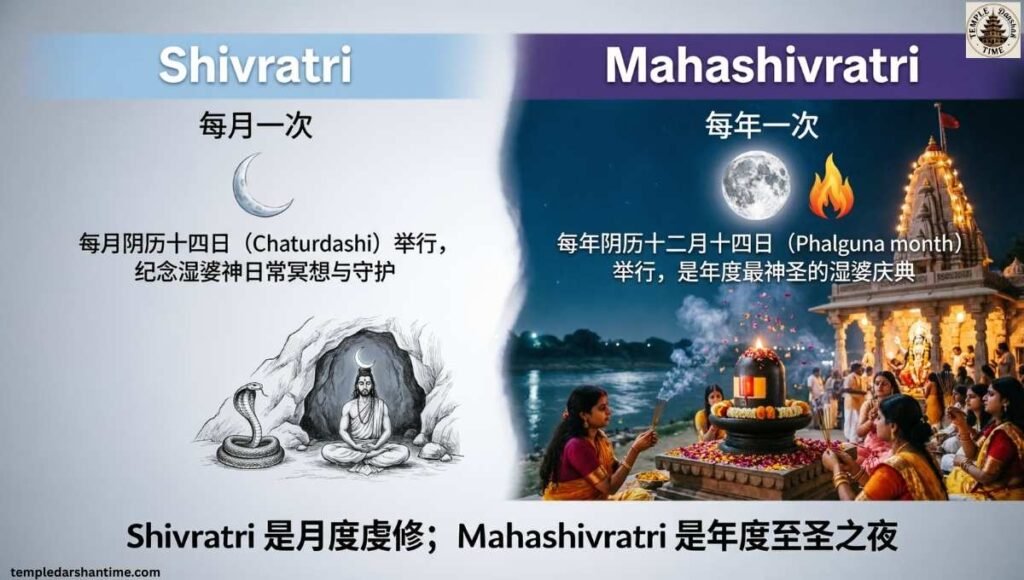
Many people wonder about the difference between Shivratri and Mahashivratri. Here’s the key distinction:
Shivratri occurs every month on the 14th day of the dark fortnight. It’s a regular observance for Shiva devotees. Monthly Shivratri is observed with prayers and fasting, but on a smaller scale.
Maha Shivaratri, on the other hand, happens once a year in the Phalguna month. It’s the most important and spiritually significant Shivratri. This is the “Great Night of Shiva” with cosmic and divine importance.
Maha Shivaratri is celebrated with greater devotion, larger gatherings, and elaborate rituals. The spiritual energy on this night is believed to be at its peak. That’s why millions of devotees observe strict fasting and stay awake all night.
Monthly Shivratri is for regular devotees. Maha Shivaratri is for everyone, devotees and seekers alike. It’s a universal festival of transformation and awakening.
Maha Shivaratri 2026 and 2027 offer a sacred opportunity to pause, reflect, and grow spiritually. Whether you’re a lifelong devotee or a curious seeker, this night welcomes you. Embrace it with an open heart, and let the blessings of Lord Shiva guide you toward peace, balance, and inner light.
Frequently Asked Questions
Why is Mahashivratri celebrated?
Maha Shivaratri is celebrated to honor Lord Shiva and seek spiritual growth and blessings.
What are the rules of Shivaratri?
On Maha Shivaratri, devotees fast, chant mantras, stay awake, and perform sincere prayers.
What do girls do on Mahashivratri?
On Maha Shivaratri, unmarried girls fast and pray for a loving, ideal husband.
What should I do on Mahashivratri?
During Maha Shivaratri, visit temples, perform Abhishekam, chant mantras, and meditate peacefully.
Which color to wear on Mahashivratri?
On Maha Shivaratri, devotees usually wear white, saffron, or light traditional clothes.
What should be avoided during Shivratri?
During Maha Shivaratri, avoid alcohol, non-vegetarian food, anger, harsh speech, and negative thoughts.
Conclusion
Maha Shivaratri is not just a festival. Maha Shivaratri is a sacred night of faith, silence, and inner strength. On Maha Shivaratri, devotees fast, pray, and remember Lord Shiva with full devotion. The energy of Maha Shivaratri helps calm the mind and remove negativity. Many people are already searching for mahashivratri 2027, maha shivaratri 2027, 2027 shivaratri date, 2027 maha shivaratri date, and shivratri 2027 date to prepare early. Planning for Maha Shivaratri in advance brings peace and clarity.
Maha Shivaratri teaches patience, discipline, and gratitude. Even a simple prayer on Maha Shivaratri has deep meaning. Whether you observe a fast or just chant mantras, Maha Shivaratri connects you with divine blessings. Knowing the correct 2027 shivaratri date helps you celebrate Maha Shivaratri properly. May Maha Shivaratri fill your life with hope, balance, and spiritual growth.

Michael Anderson is a spiritual content writer with 8+ years of experience documenting temple darshan timings across India. He has completed 100+ projects with 95% client satisfaction, helping thousands of devotees plan meaningful spiritual journeys.